A new Adelaide University study is challenging long-held assumptions about women in agriculture, revealing many Australian women involved in farming businesses do not identify with the traditional ‘farmer’ label, despite playing critical roles in the success of modern farms.
Published in the Journal of Rural Studies, the research found while some women strongly embrace the title, others are rejecting it, wanting to be recognised for their business and professional skills.
Author Dr Emily Buddle, from the university’s School of Agriculture, Food and Wine, said the findings highlighted the growing complexity of contemporary farming businesses and the need to rethink how women’s work in agriculture was recognised.
“When we talk about women’s role in farming businesses in Australia, the default assumption is often that they simply want to be recognised as farmers in their own right,” Dr Buddle said.
“My research suggests the reality is much more nuanced. Many women are not seeking the title of farmer. Instead, they want recognition for the important and often highly specialised work they contribute to farming businesses.”
The study involved focus groups with 27 women from South Australian farming enterprises and identified a spectrum of identities, ranging from women who saw themselves as ‘big-F Farmers’ to those who described themselves as ‘little-f farmers’ or rejected the label altogether.
Women who identified as ‘big-F Farmers’ typically undertook day-to-day paddock work and saw farming as central to their sense of self.
Others felt their primary contribution lay elsewhere, managing administration, finance, compliance, human resources and business operations.
Several participants described these responsibilities as running the farm’s ‘control room’ – work that is increasingly essential as farming businesses become larger, more complex and more heavily regulated.
“The nature of farming has changed dramatically over recent decades,” Dr Buddle said.
“As farms have grown in size and become more reliant on global markets, the demands of administration, risk management, compliance and employment have also increased.
“Many women are bringing professional skills developed in other careers to help run multimillion-dollar businesses.”
Historically, women often balanced domestic responsibilities alongside farm work.
Today, many are managing sophisticated business functions that underpin farm productivity and profitability.
“While women have long been responsible for the control room of the farm, the control room itself has changed,” Dr Buddle said.
“No longer are women simply milking cows, preserving produce, raising children and completing the tax return. They are helping to manage complex businesses, yet much of that work remains unseen, unremunerated and under-appreciated.”
The research also found that women overwhelmingly rejected the term ‘farmer’s wife’, with participants expressing frustration at being defined by their husband’s occupation rather than their own contributions.
Dr Buddle said the persistence of the label reflected broader social expectations that continue to shape life in regional Australia.
“Many women have their own professional identities, skills and expertise, yet the ‘farmer’s wife’ trope remains surprisingly strong,” she said.
“The women in our study wanted to be recognised as individuals contributing to the success of their farming businesses, not simply as supporters standing beside a farmer.”
According to Dr Buddle, the findings had important implications for creating a more inclusive agricultural sector.
She argued recognising women solely through the farmer lens risked overlooking the diversity of roles they performed and the different ways they experienced life within farming businesses.
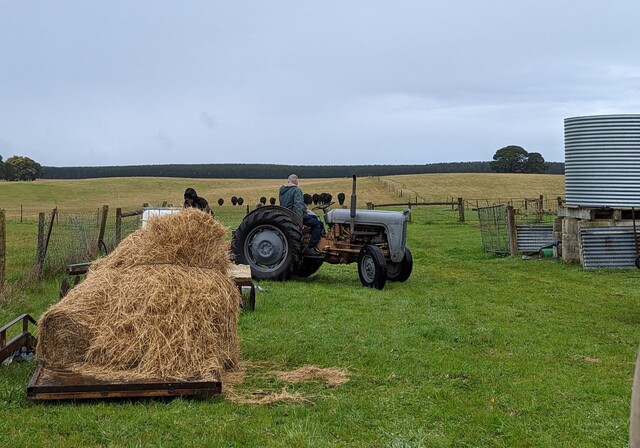
“The image of a farmer remains strongly associated with traditional symbols such as tractors, Akubras and paddock work,” Dr Buddle said.
“Many women don’t see themselves reflected in that image, even though they are essential to the operation of the business.
“If we want a more inclusive agricultural sector, we need to move beyond a one-size-fits-all understanding of what it means to contribute to farming. Recognition should reflect the diverse skills, expertise and identities that women bring to Australian farming businesses.”
The study, ‘Little-f farmer, big-F Farmer, or not at all? Questions of identity amongst Australian farming women’, was published in the Journal of Rural Studies.