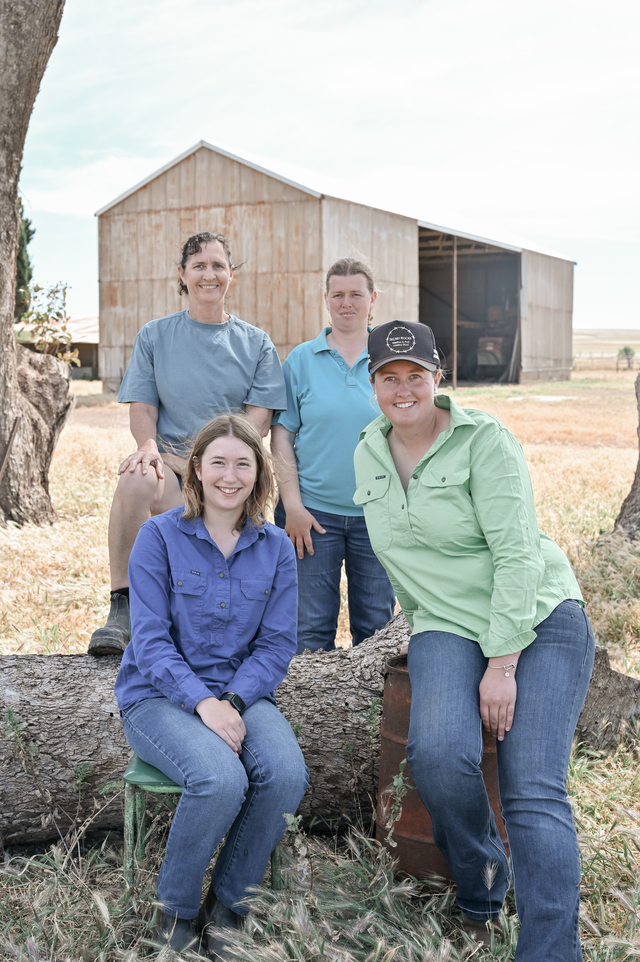
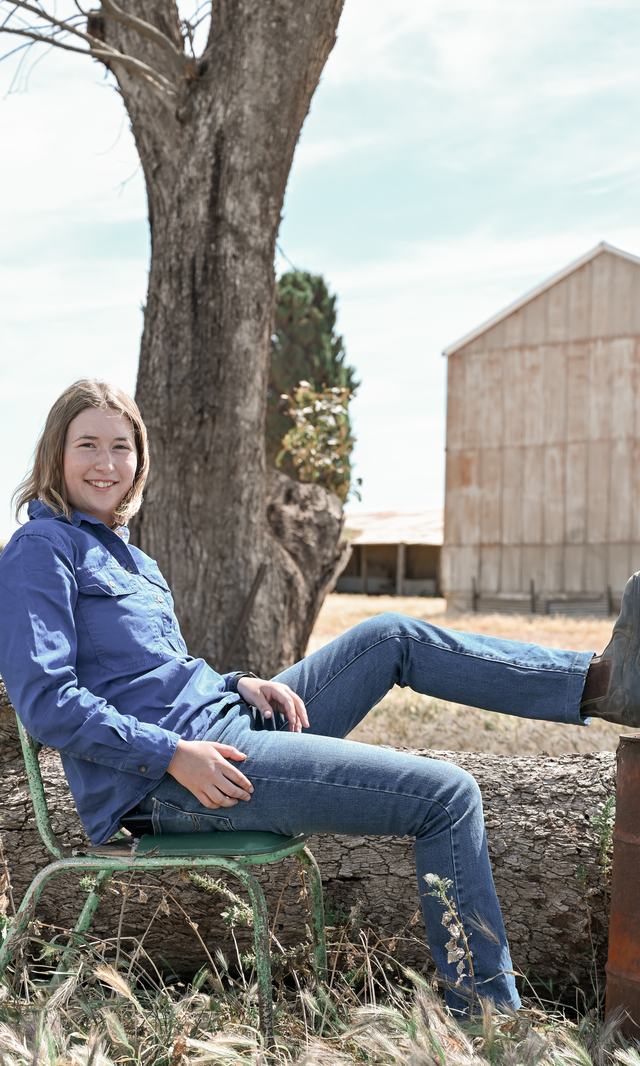
Farming has often been seen as a man’s world, but for this generation, that perception is changing.
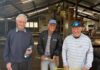
Across Eyre Peninsula and beyond, more women are stepping – or driving the tractor – into the fields of agriculture.
The change is quietly happening as a natural and welcome shift in the landscape of how farming families and communities operate.
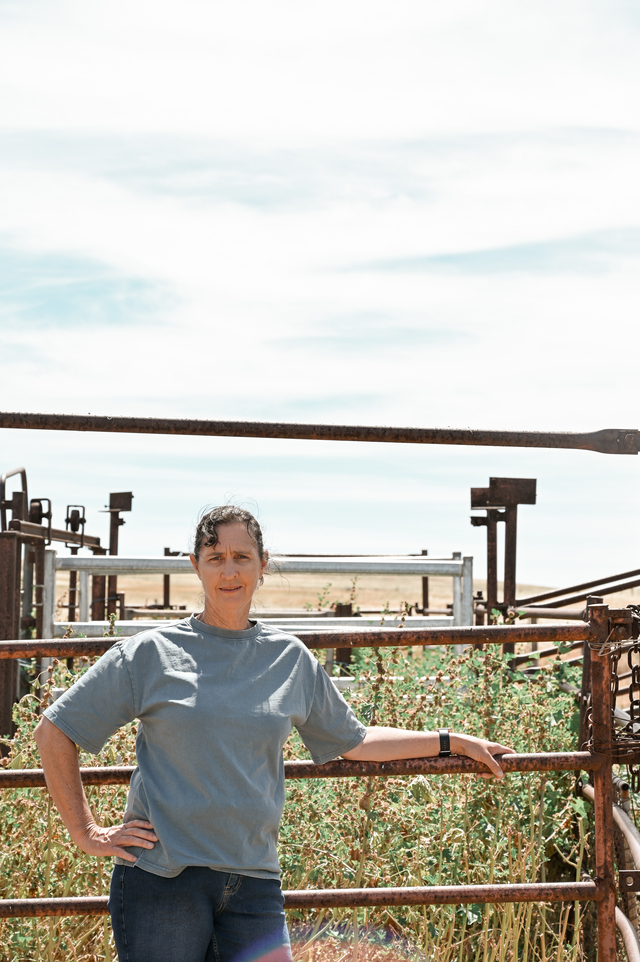
Carolyn Mudge was born and raised on the family’s Eyre Peninsula farm, about 25 clicks outside of Wirrulla. She runs Maildaburra Hereford Beef, a poll hereford stud and beef feedlot.
She’s honest, works hard and is juggling her fair share as a single mother running a farm.
As a young girl, Carolyn always aspired to be a farmer, spending her childhood chasing her father around the paddocks soaking up as much knowledge as she could.
“It was the only thing I ever wanted to do, be a farmer,” she says.
“It was just a natural progression, something that was always going to happen.
“I don’t know whether dad just thought he should chuck me in the deep end and see if I could do it – but that’s what happened, I got my semi-licence when I was 17 and have been carting grain to the silos ever since then.
“He was always a forward-thinking farmer, dad.”
Carolyn’s brother, Darren, lives with his family on a property nearby – about a decade ago – they separated the business and now run independent farms, but they still work together when they need to.
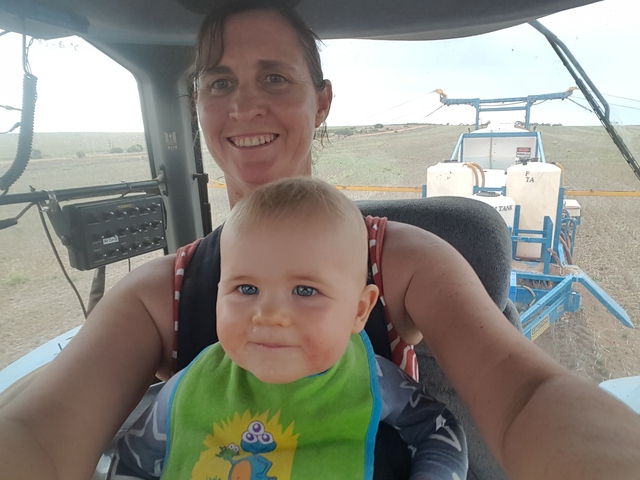
It was a busy time for everyone, it also coincided with Carolyn’s journey to become a mother at 43.
“Seth’s an IVF baby,” Carolyn explains.
Today, Carolyn runs the farm, and her son Seth is soaking it all in, though his nine-year-old dreams are to become a paleontologist – and a farmer, which Carolyn of course supports.
Business savvy, the farm is at a point where Carolyn has recently employed a new livestock overseer, allowing her to focus on her passions in strategic planning and growth, and also aiming to give Seth the freedom to choose his own career path.
“Then he can decide later on if he wants to be a farmer,” she said.
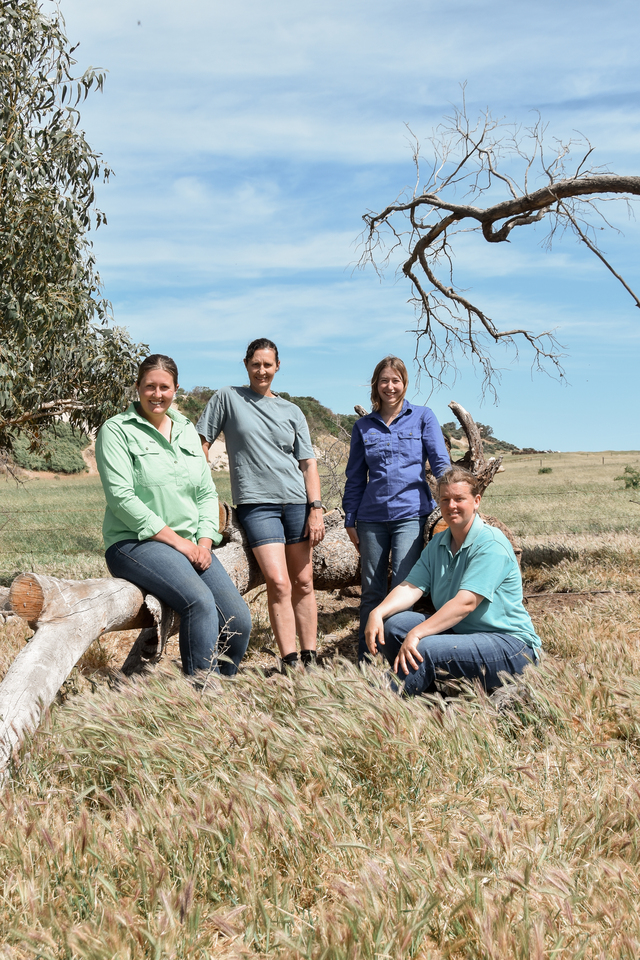
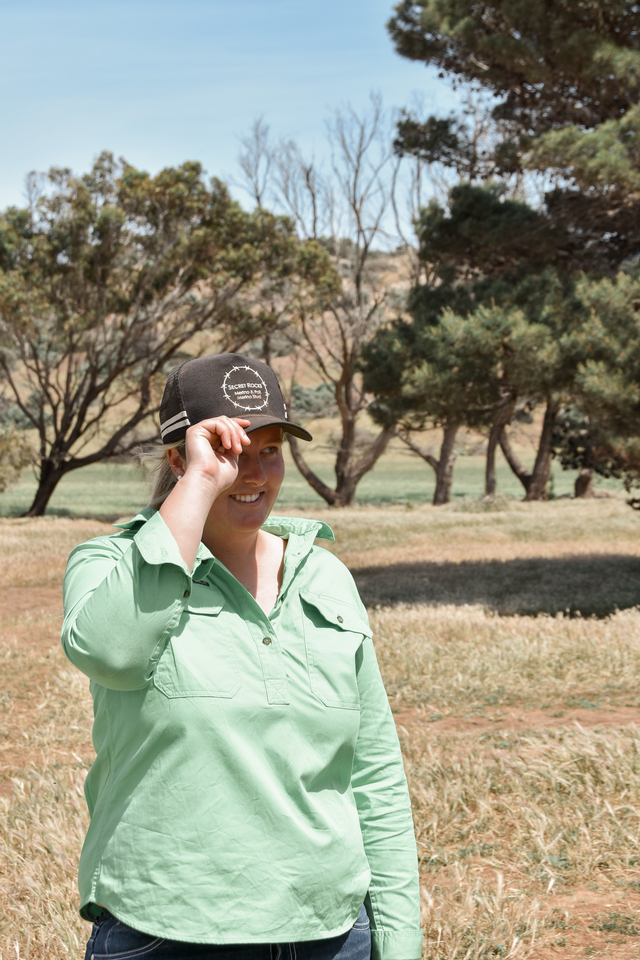
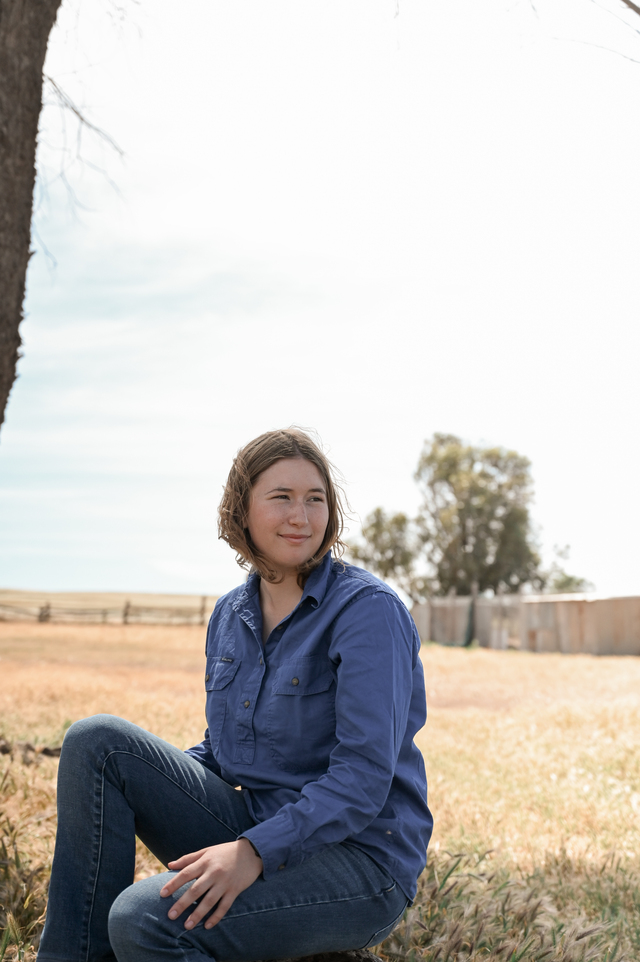
Brooke Stratford grew up on the family farm Secret Rocks just outside of Tumby Bay, and agriculture has always been a big part of her life.
She has an air of assertiveness, and a hidden layer of playfulness if you are paying attention.
“After completing year 12 I knew I wanted a hands-on career and to contribute to our family’s future,” she says.
“My year 12 research project was designing a ram stud which is where Secret Rocks Stud began in 2019.”
Brooke says there is much to enjoy about farm life; she loves getting to work outdoors and seeing the results of hard work.
“The bad is how much we rely on the weather, markets and many other conditions outside of our control,” she adds.
“Long hours, physical demands and setbacks can be disheartening.”
It is also a demanding industry for a young woman.
“Being young and female means having to prove yourself, which isn’t always easy,” she admits. Yet, Brooke views these obstacles as essential for building professional strength.
She believes these challenges teach resilience and ensure every successful outcome is hard-earned and profoundly meaningful.
For Brooke, the future of her farming career is about growth and balance.
“I want to keep building different aspects of our operation including the Secret Rocks Stud, lamb and cattle feed lotting and expanding into the pastoral region of South Australia,” she explains.
“I see the farm becoming more innovative using new technology and practices to make our business more sustainable, while still respecting the traditions that got us here.”
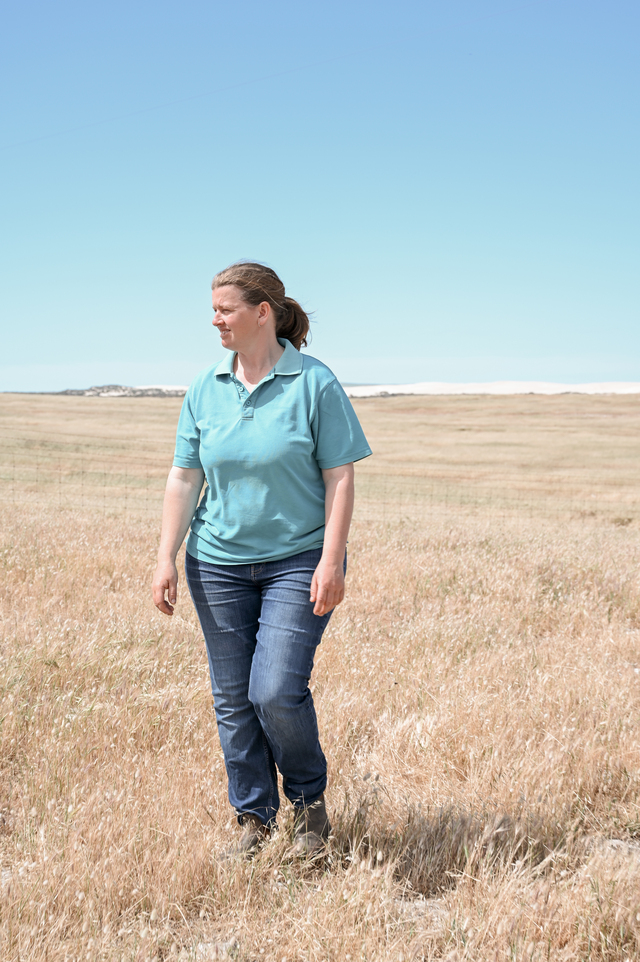
A third-generation farmer in Sheringa, Kimberly Wandel was always going to work on the farm. Her grandfather bought the land on which her family live and work, and Kimberly says she will do it for the rest of her life.
Kimberly would be best described as steady. She is doing the job she always wanted to do, standing in the shearing shed at her farm Glenross in Sheringa, and is comfortable and pretty easy-going.
When asked if she could have pursued her dream 50 years ago, Kimberly is aware she was born at the right time.
“The generations changed pretty much, right as I was coming into it,” she says.
And now the farmer she has become is a source of pride for her father.
“Dad said I was always interested in sheep,” she laughs.
Full-time on the farm, Kimberly gets her hands dirty doing anything that is needed.
“Cropping, fencing, sheep work,” she explains.
“We do wheat, barley and oats.”
Glenross backs onto the Sheringa sand dunes, right against the white sandhills.
A stone’s throw from the Sheringa coastline, it is a picturesque place to work – something not lost on Kimberly.
“I like fishing,” she says.
“Every chance I get – it’s good when you finish work you can whiz down there and go for a fish, fang along the beach,” she smiles.
Growing up on a farm has shaped every part of Emily Lawrie’s life. As one of three girls, she always assumed she would be the one to step into the role at her family farm in Tumby Bay.
“I’ve grown up on a farm my whole life,” she says.
“It was just something I always thought I wanted to do – I’m one of three girls so there were no other boys to take over the farm.”
Today, she works within a mixed-enterprise operation, a rhythm she knows inside out.
“We are a mixed enterprise, with cropping and sheep,” she explains. “We also have a merino stud, Collandra Merinos.
“We crop wheat, barley, beans, oats and vetch.”
When asked about the highs and lows of farming, Emily pauses. Like many farmers, she finds the question difficult – the good and the bad are often two sides of the same coin.
“It’s hard to say what the good and bad really are,” she admits.
“You get your good years where it rains when you need it to, and others where it doesn’t rain at all.”
Looking ahead, she hopes the future of the farm holds steady, even as technology continues to transform the industry.
“The future of the farm to me, I hope looks similar to it does now,” she says.
“We will keep the stud going for as long as possible – with technologies changing it makes it hard to keep up with it all.
“The cropping side of things will change a lot, I think, with technologies as they are always improving machinery in many different ways.”
Emily, like the other women shaping the Eyre Peninsula’s farming landscape, is carrying forward a legacy in her own quiet, capable way – proving again that the next generation of farmers does not look like it once did.