The Eyre Peninsula Railway was once a thriving passenger and goods service, but like an Ancient Roman ruin the tracks carry with them traces of the past.
Typical of the region it inhabits, there is a certain isolation about the Eyre Peninsula Railway, but like the region itself, it has chugged along with vibrancy and character for more than a century.
Today, the railway is a shadow of its past splendor and operates in an isolated pocket in the peninsula’s west.
Its main hub in Port Lincoln and line through the heart of the region has sat unused since 2019.
From a peak of 777 kilometres, today only a 60-kilometre stretch of the narrow gauge track remains open, with the line continuing in an industrial hub.
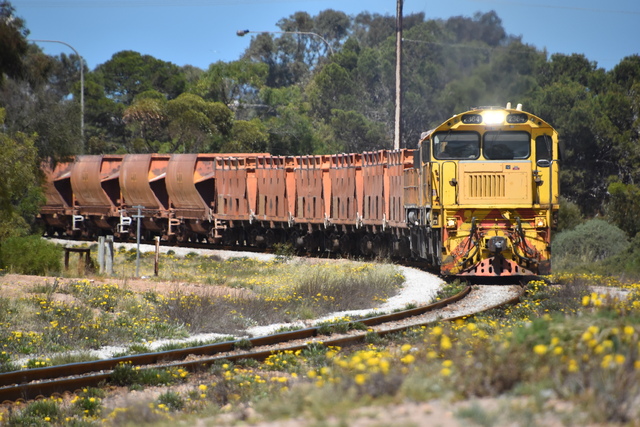
On the West Coast, gypsum is transported from the deposit near Penong to the wharf at Thevenard, that lone stretch of the line still in use.
Another line – geographically – sits on Eyre Peninsula, with Whyalla the destination for iron taken from the nearby mines such as at Iron Knob, but its history is linked closer to the line in Port Augusta.
The EP railway does not carry with it the legacy of the famed Pichi Richi Railway between Port Augusta and Quorn, or the SteamRanger Heritage Railway operating out of the Adelaide Hills and down to Victor Harbor, yet its place in Eyre Peninsula history remains a focal point.
So much so, a push has come in recent years to reopen the line and return it to former glory.
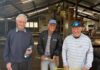
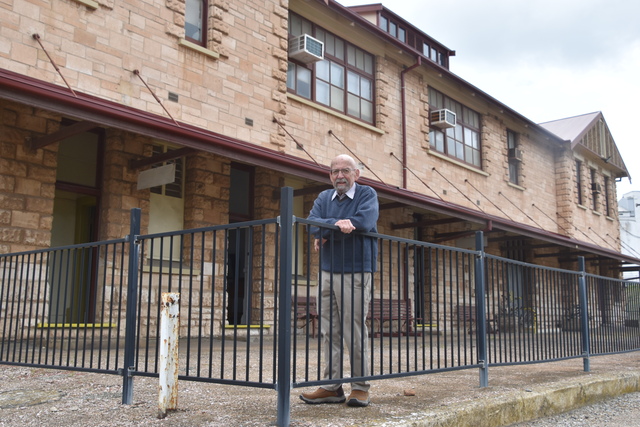
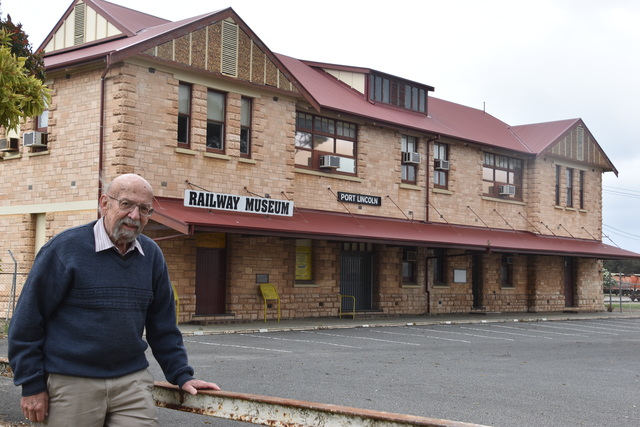
Today, Port Lincoln Railway Station is home to the Port Lincoln Railway Museum, run by the Eyre Peninsula Railway Preservation Society.
It is a love letter to a bygone era, not just for the city, but most of the region.
Overseeing the museum is preservation society president Peter Knife and a small team of volunteers.
Peter has been part of the museum team since it first opened and for the past 15 years has served as president.
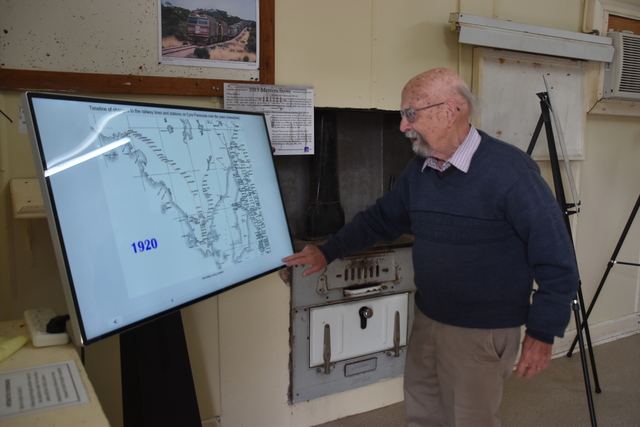
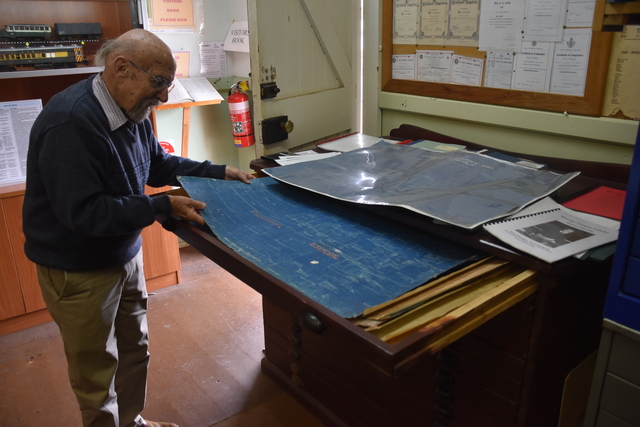
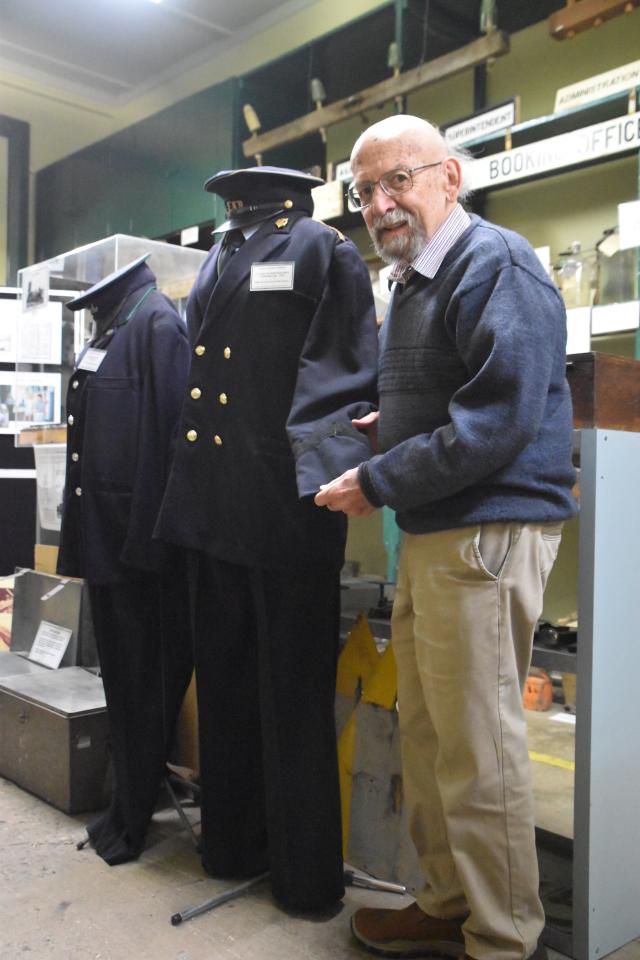
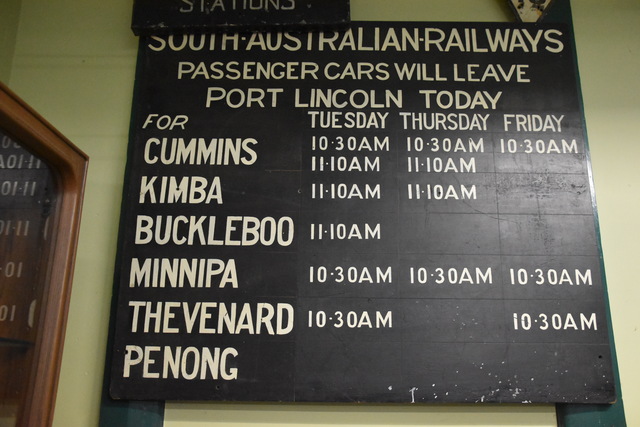
Housed in a wonderful two-storey stone building – opened in 1927 to replace the original timber structure from 1908 – the museum holds a treasure trove of railway memorabilia and history, with artefacts from timetables to uniforms, photographic displays to blueprints.
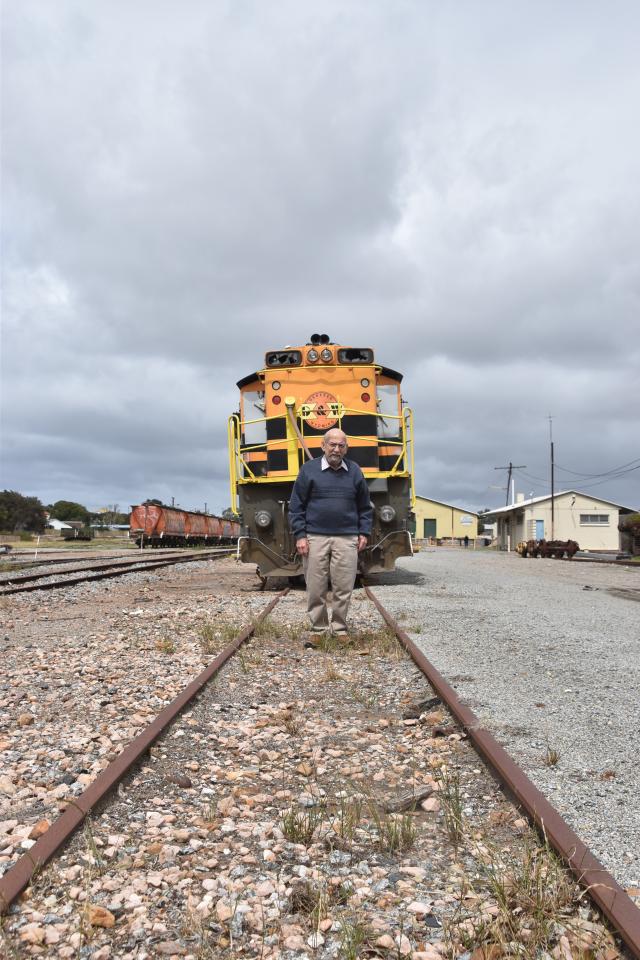
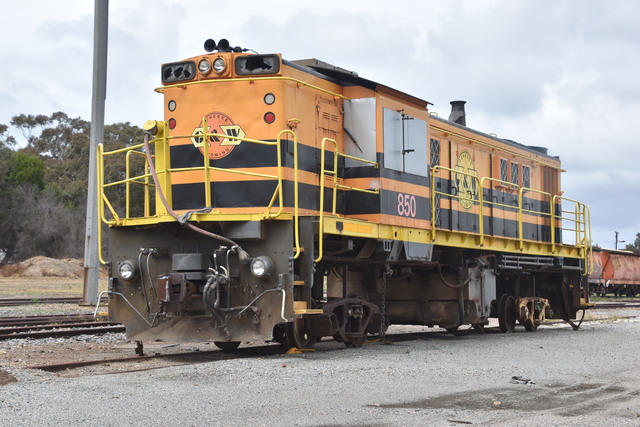
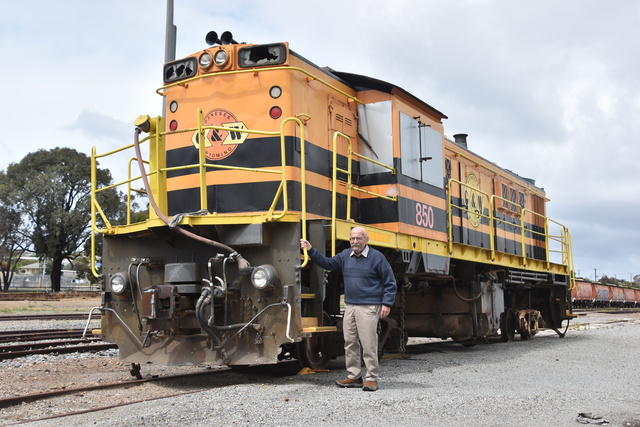
In the yard is one of the prize possessions – a diesel 850 class that ran the line from the 1960s.
Walking through the railway station today provides a whisper of what was once a busy station.
The hustle and bustle of tickets punched, of bags and parcels checked, has been replaced by quiet – and loving – reflection.
For Peter, without the railway, Eyre Peninsula would not exist in its current guise.
The development of the line from Port Lincoln, he said, laid the groundwork for the transformation from pastoral land to agricultural land.
“The railway was absolutely vital in building the region,” Peter said.
“All the inland towns on Eyre Peninsula, apart from Cleve, exist because of the railway. None of them existed prior to the coming of the railway.
“Every railway siding had towns surveyed around them. At the time, nobody knew which would develop and which wouldn’t – most never developed, some did for a while but didn’t survive, and some – like Cummins, Wudinna and Kimba – thrived.”
The first stretch of line, from Port Lincoln to Cummins, opened in November 1907.
Built and operated by South Australian Railways, the creation of a railway connected this vast region and its outlying communities and farms, which were ever growing.
When, at the end of the 19th century and start of 20th century, large pastoral leases were relinquished and opened to agriculture, it required an economic means of transport to bring product to the coast.
The railway did this, and as the network grew so too did it open up EP for agriculture.
From the first journeys in 1907 up until 1968, the railway operated both passenger and goods trains.
A link to Port Augusta, and therefore to other parts of the state, never materialised, despite proposals in the 1920s and 1950s, with cost the key prohibitor.
By the mid 1920s most of what is today the Eyre Peninsula Railway was constructed, with a further nine-kilometre stretch out west in 1950 bringing the line to its peak size.
In the decades to follow came a regression of the railway.
Services started to close – the Mount Hope line was shortened in 1965, with Kapinnie becoming the terminus – before it too shut in 2002.
Part of the line bringing gypsum into Thevenard – once a loop going past Kowulka and Wandana – closed and in 1984 the Thevenard unloading facility was upgraded with a loop.
By 2018, the last grain train on the Kimba branch ran, and one year later came the shocking news Viterra would move its haulage to road transport and no longer run grain trains down to Port Lincoln.
The railway helped to build the region, but other transport modes and routes caught up, leaving rail to fall from its lofty perch.
Yet in its heyday, Peter noted, the Eyre Peninsula Railway was a “thriving” line.
In a way, its isolation was a blessing and a curse.
Being disconnected from the main SA network allowed the railway to get on with its business, often without interference – or knowledge – from Adelaide.
“It was a thriving line that was very much its own existence,” Peter said.
“The railwaymen over here lived by the motto of ‘whatever it takes, get it done’, as well as ‘whatever Adelaide doesn’t know won’t hurt them’.
“There were lots of things Adelaide didn’t like, but oh well, they were done!”
Being so far from Port Augusta – not even the Whyalla line was connected to the fellow Spencer Gulf city until 1972 – meant costs became prohibitive to attempts at joining EP with the main South Australian Railways network, and thus a direct link to Adelaide.
The state government felt there was “no need” to connect the EP network to Port Augusta for a few reasons.
“It was talked about multiple times and there were two serious investigations in parliament, but both of them came back with the same result – there was no economic justification,” Peter said.
“Part of the reason is here. Port Lincoln is the deepest natural port in SA, so there was no point in building a railway around to Adelaide and carting agricultural product there to put it on ships, when there is a better port in Port Lincoln.
“A combination of the network here, and the twice-weekly overnight boat to Port Adelaide meant transport needs were taken care of. Then bus and airline travel became more usable and common.”
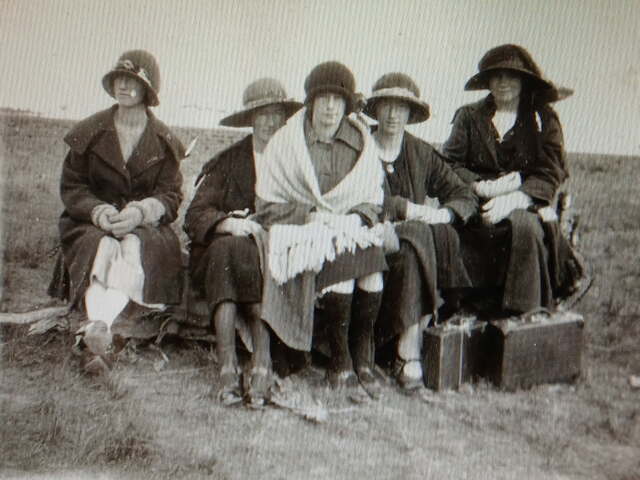
For decades, passenger rail travel between Port Lincoln and other EP towns was an integral part of the service.
“Originally there was a passenger carriage or two on the back of a goods train,” Peter said.
“It took two days to get from Port Lincoln to Ceduna. The train would stop overnight at Minnipa and people would go to the pub or boarding house, then continue the next day. In the 1930s rail cars were introduced and they were able to get through comfortably in a day.
“Rail cars handled parcels and passengers until 1968. By then decent roads were built on Eyre Peninsula and the road traffic had taken over the demand for passenger service and light freight, however rail was still needed for heavy traffic and bringing in agricultural equipment, and taking out wheat, barley, oats and everything agriculture.”
For many, Friday 31 May 2019, was a sad day.
About 500 people turned out in Cummins to farewell one of the final trains to pass through the town down to Port Lincoln, after a decision was made earlier in the year by grain-handling group Viterra to not renew its contract with Genesee and Wyoming Australia (GWA) – now known as Aurizon – for grain movement on Eyre Peninsula.
For Peter, this was a “tragedy economically”.
“Instead of having two crew on a train hauling 3000 tonnes of grain, 30 road trains each with a driver run on the road these days. And rail is more fuel efficient than road in any case – for bulk commodities, rail is by far the most sensible solution.”
Peter noted if the situation at Ceduna had been duplicated further down the line, trains may still be running today.
“At the time Viterra were not giving long-term contract renewals to the railways and that meant the railways could not justify a lot of expenditure on maintenance and upgrades, so it became a downward spiral,” he said.
“At Ceduna, the gypsum line was beginning to struggle and GRA (Gypsum Resources Australia) gave Aurizon a 10-year contract, so they could justify spending a lot of money upgrading the track.
“Viterra were saying it was not economically justifiable, but it transfers costs to taxpayers because of the impact on the roads. We noticed the impact of no rail in the first two or three years as the roads deteriorated rapidly during harvest.”
In recent years, there has been a push from Viterra to reinstate the EP line, with the matter taken to the state government.
A case study was undertaken into understanding whether there could be a future for trains in the region. A final decision has not yet been made public.
For Peter, it makes economic sense to go as far as Cummins and Wudinna, and potentially to Rudall, but as for a full reopening of the line, he did not see that occurring.
Elsewhere in South Australia, rail and history enthusiasts young and old take special journeys to towns such as Port Augusta and Victor Harbor to take a step back in time.
The Pichi Richi Railway and SteamRanger are two of the country’s best known tourist railway operations, iconic for their steam trains puffing alongside breathtaking scenery.
Asked whether such a service could be replicated out of Port Lincoln, Peter noted it was unlikely.
“The rules at the moment are that anyone who works on the tourist railways has to be qualified and certified virtually to the same level as someone running freight trains across the Nullarbor. Port Lincoln does not have enough people to have that volunteer resource available,” he said.
“A lot of the volunteer staff on other lines come from Adelaide.”
Other concerns were obtaining and running a locomotive, plus the volume of tourist traffic.
“To come to Port Lincoln you have to want to come to Port Lincoln, we are not connected like a Quorn or Victor Harbor,” Peter added.
That has not stopped the preservation society from attempting to make it a reality, even if for a short period.
Some years ago there were discussions with Pichi Richi about bringing carriages to Port Lincoln and running trains to Cummins for a few weekends.
“Pichi Richi loved the idea, GWA were in favour and they would provide a locomotive to pull the train, but GWA didn’t have passenger accreditation for this, so Pichi Richi looked into accreditation and it involved four months of volunteer railway paperwork for two weekends of approvals.”
Still, the dedicated museum team continues its passionate undertaking of keeping the railway’s flame burning.
These days the museum is open once a week, on Wednesdays, with a team of five regular volunteers, plus a few others who help with administrative and maintenance work.
Peter’s wife Margaret, the preservation society treasurer, is among them.
Those involved are in their mid 70s to 90s and the museum is calling for new volunteers to hop aboard. Just like Peter did.
He is a foundation member of the preservation society, which was formed in the 1990s.
Peter and Margaret were living in New South Wales at the time and in wanting to build a model railway based on Minnipa he got in touch with people on Eyre Peninsula.
Peter and Margaret became regular Port Lincoln visitors as Peter started doing research trips for a book he was writing – Peninsula Pioneer, released in 2007 – and moved to the city in 2010.
All the while, they and fellow volunteers – including Bob Prout and Trevor Hoskin, involved from the start and still active today – have focused on developing the museum.
“When it opened it was two rooms and we have gradually been able to expand,” Peter noted.
“We took over more rooms, then the freight shed, and when the line shut down we took over the crew room.
“Grants along the way have helped with equipment facilities, displays and storyboards around the museum.”
The museum welcomes about 600 people a year, but when cruise ships are around that number can swell to about 1000.
Visitors are mainly from out of town, with a sprinkling of locals, and Peter encouraged Port Lincolnites to check what the museum has to offer.
Preservation society members spread far beyond Eyre Peninsula and include people from Adelaide and interstate.
Peter and Margaret said they would love to stay on as volunteers, but were hoping for others to lead the way.
“If we had more volunteers we would love to start opening again on Sundays.”
Even if the trains do not roar into the station as they once did, that would ensure the legacy of the Eyre Peninsula Railway would continue in some capacity.