Initial results into research investigating crop topping at reduced rates of paraquat following the announcement of proposed restrictions on the widely used chemical by the Australian Pesticides and Veterinary Medicines Authority (APVMA) have been released.
South Australian Grains Industry Trust funded an out-of-session project in October 2024, managed by Senior Researcher with the University of Adelaide’s Weed Science Group Dr Jenna Malone, while AgXtra was contracted to set up the field sites.
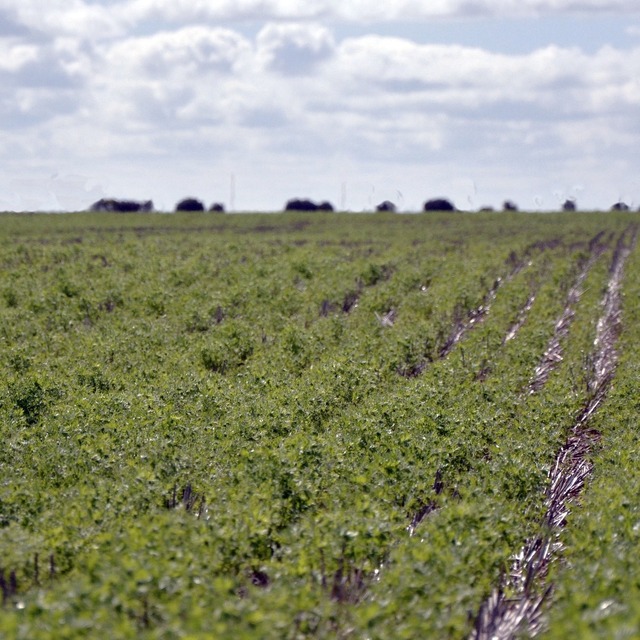
Prior to harvest 2024, four field trials were conducted, one in lentils and one in faba beans at two different high and low rainfall sites.
Current practices of crop topping in lentils and faba beans in South Australia typically involve the application of paraquat at rates of 800 millilitres per hectare or higher, applied just prior to crop maturity, followed by harvest between 5 to 10 days later.
However, the APVMA’s proposed changes of a reduction in the allowable rate of paraquat to 400ml/ha and increase in the minimum withholding period to 14 days means current practices will no longer be allowable.
The trials assessed the efficacy of the reduced rate of paraquat in combination with, or replaced with, other products currently registered for use in crop topping in lentils and faba beans.
Trials assessed time to brownout, pod drop, efficacy of ryegrass seed set control and crop yield.
Preliminary results from the trials demonstrated the proposed half rate of paraquat did not achieve adequate levels of brownout and that preliminary results based on visual assessment suggest that sufficient ryegrass control was also not achieved.
While no alternative treatments were as effective as the current full rate of paraquat, there were a few treatments that showed promising results.
This included Paraquat 250 at the reduced rate of 0.4 L/ha with the addition of Sharpen at 34 g/ha.
The project also looked at some potential new products that are not yet registered for this use pattern including Nonanoic acid 525 (Slasher).
This product was trialled at 3.5 L/ha with the addition of Paraquat 250 at 0.4 L/ha.
Based on a comparison of the percentage of desiccation achieved 14 days after treatment, the treatment that was most effective as an alternative to the full rate of paraquat was Paraquat 250 at 0.4 L/ha + Nonanoic acid 525 at 3.5 L/ha.
The treatment of Paraquat 250 at 0.4 L/ha + Sharpen at 34 g/ha had similar efficacy, however, the percentage of desiccation achieved was not consistently higher than that of Paraquat 250 at 0.4 L/ha alone.
There was no significant negative effect of any of the treatments on pod retention.
Pot trials focused on application timing and efficacy of ryegrass seed set control have been conducted.
Seed viability testing will be conducted this month, allowing time for dormancy to break.
Ryegrass plants harvested from the field trials will be tested for seed viability to assess the efficacy of the different treatments on ryegrass seed set control and whether timing of treatments has an effect on ryegrass seed set control.
Lentil and faba bean seeds retained from harvest will be assessed for viability to assess any effects the treatments may have on seed quality.
Results from the seed viability and pot trials should be available by the end of May.
The APVMA’s final decision on the use of paraquat is expected in the fourth quarter of 2025.
It is noted these are preliminary results and final results from this research will be available at the end of the project, scheduled for June 30.