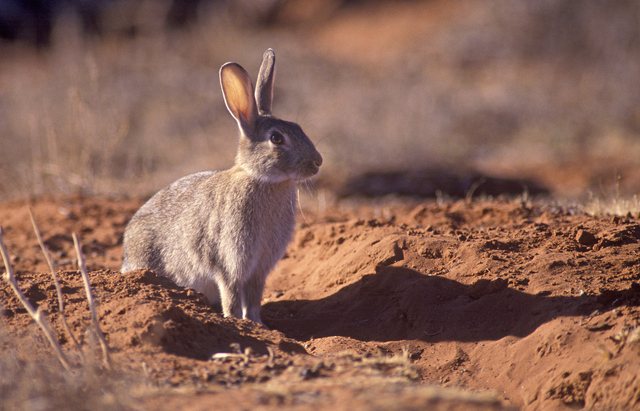
Landholders impacted by the increasing threat of feral rabbits will benefit from the launch of the third edition of the Glovebox Guide for Managing Feral Rabbits from the Centre for Invasive Species Solutions (CISS).
The updated guide is a practical resource to help land managers understand how to manage rabbit populations effectively and reduce the damage they cause.
“Rabbits remain one of Australia’s most widespread and damaging pest animals. They have serious, ongoing impacts on our nation’s agriculture, biodiversity and way of life,” CISS National Feral Rabbit Management coordinator Heidi Kleinert said.
“This new edition is for anyone with a rabbit issue. It provides the latest in best practice rabbit management for land managers Australia-wide
“It sets out information on how rabbits live and breed, outlines options for control – including biocontrols, describes monitoring techniques and helps landholders develop a cost-effective rabbit management plan for their local situation.”
The guide follows an ‘assess-plan-manage-improve’ approach and outlines a staged process for long-term success – starting with knockdown, moving to knockout and finishing with mop-up actions to prevent reinfestation.
“This guide is designed to sit in an office, ute or toolbox – ready to be used when decisions need to be made,” Ms Kleinert said.
“It backs people on the ground with clear, practical guidance, supporting national efforts to reduce rabbits’ impacts.
“Action is what makes the difference in feral rabbit management. Real progress happens when landholders, community groups, councils and agencies are equipped with the best knowledge and tools so they can move beyond identifying the problem and coordinate their efforts on the ground.”
Peter Day of Rabbit-Free Australia said the new edition had “updated information on biocontrols and how knowledge of rabbit behaviour and biology is applied for best practice rabbit control”.
You can view the new guide at pestsmart.org.au/wp-content/uploads/sites/3/2026/03/Invasives-Glovebox-Guide_Rabbits-WEB-260326.pdf