Australian researchers are breaking the Gen-Z stereotype and leading the way as the next wave of weed experts.
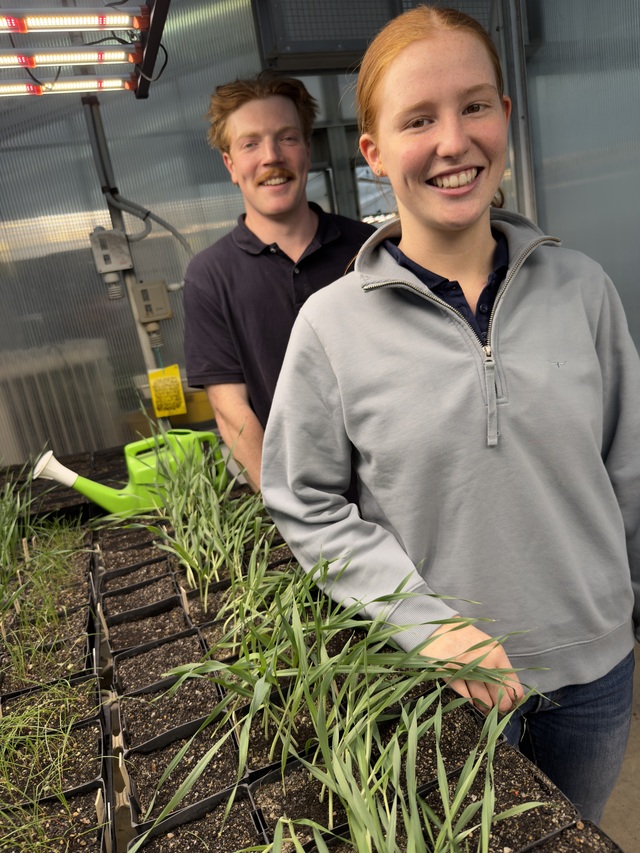
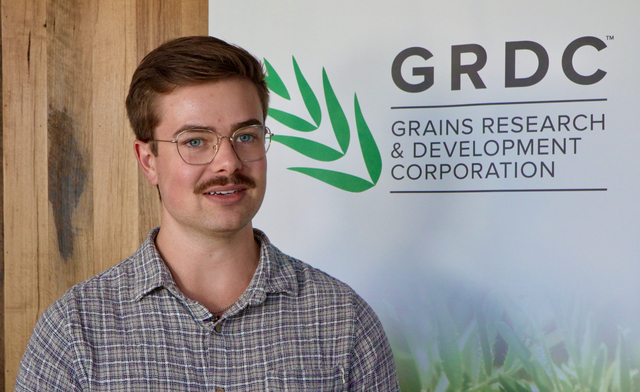
At Adelaide University, two new honours students, Rosie McMurray and Finn Sullivan-Llewellyn, have commenced projects associated with the Grains Research and Development Corporation (GRDC) national Weeds Management Initiative (WMI), which is not so surprising given their mentors in this field are also their parents.
Mr Sullivan-Llewellyn is the son of highly regarded and respected researcher, Professor Rick Llewellyn – who spent time working at Cummins, co-authored the 2015 and 2023 Economic Impact of Weeds reports and helped develop innovative decision-support tools including a summer weed app.
This year, Prof Llewellyn was recognised with the prestigious GRDC Seed of Light award for his contribution to the grains industry.
Mr Sullivan-Llewellyn grew up surrounded by agriculture, both through his father’s research work and time spent on the family farm.
He completed his Bachelor of Agricultural Science at the Adelaide University last year.
While studying at the Waite campus, he undertook casual work on a range of projects and crops at the South Australian Research and Development Institute, a division of the Department of Primary Industries and Regions South Australia.
“I am looking forward to my honours project this year investigating non-chemical broadacre weed management using robotic technology,” Mr Sullivan-Llewellyn said.
“It’s great to feel a part of an experienced group where research focus is directed at industry on-farm decisions.
“I’m interested in contributing to practical weed management solutions using novel technologies such as robotics that give growers more confidence and flexibility in their systems.”
Drawing on her family’s agricultural science background, Adelaide University honours student Rosie McMurray is no stranger to plant breeding, agronomy and weed-related research.
Her father, Dr Larn McMurray, has worked extensively for many years as a leading pulse and plant breeder to improve the productivity of legumes including lentils, chickpeas and faba beans.
Dr McMurray has contributed to research addressing hard-to-control broadleaf weeds in dryland farming.
“Being surrounded by agricultural research from a young age inspired me to pursue this career path at university, completing my Bachelor of Agricultural Science where I developed an interest in breeding and genetics,” Ms McMurray said.
“I look forward to furthering my understanding in these areas through my honours project of investigating the mechanisms of glyphosate resistance in flaxleaf fleabane.”
GRDC weeds manager Sarah Morran said it was encouraging to see emerging researchers choosing a career in weed science.
Ms Morran’s own research journey included work at Colorado State University, before returning to Australia to help lead what is now the largest co-ordinated weed research collaboration in southern hemisphere cropping systems.
“We’re excited about younger researchers choosing the weeds field – especially Rosie and Finn who have gained knowledge from around their kitchen table, laboratory and field trial sites with their parents,” she said.
“Under Chris Preston’s stewardship at Adelaide University I am confident we’ll continue to find solutions to future food production challenges.”
In addition to building home-grown talent, the WMI is attracting another young gun with international expertise.
The University of Western Australia has welcomed Canadian researcher William Kramer to the team, bringing northern hemisphere experience in weed biology and herbicide resistance.
Raised on a fourth-generation grain farm in northern Alberta, Mr Kramer’s research has focused on crop-weed interactions and plant responses to competition.
“Growing up on a grain farm showed me how quickly weed resistance can shift the economics of a paddock,” he said.
“My research has focused on understanding the biological mechanisms behind those shifts.
“Australian growers are facing some of the most complex herbicide resistance challenges in the world, and I’m excited to contribute to research that could deliver solutions in both hemispheres.”
Australia’s leading weed researchers recently came together in Adelaide with scientists and agronomists from across Australia to advance coordinated research efforts tackling herbicide resistance and evolving weed ecology.
The WMI is a five-and-a-half year program bringing Australia’s leading researchers and communications and extension specialists together to work on innovative, cutting-edge weed management research, development and extension.
It aims to provide sustainable and effective weed management strategies through four nodes across Australia, ensuring both national collaboration and regional specificity.
Weeds cost Australian grain growers an estimated $4.43 billion annually and remain one of the most pressing challenges facing the industry.
Growers are seeking solutions that reduce costs, protect soil health, improve crop performance and free up time to focus on productivity rather than weed control.