A team of researchers from CSIRO are exploring if a small insect can hold the key to tackling one of the most invasive and costly weeds in Australian grain production.
The research, an investment by the Grains Research and Development Corporation (GRDC), aims to deliver biological control solutions for flaxleaf fleabane, a weed that costs Australian growers significantly each year in lost yields and control costs.
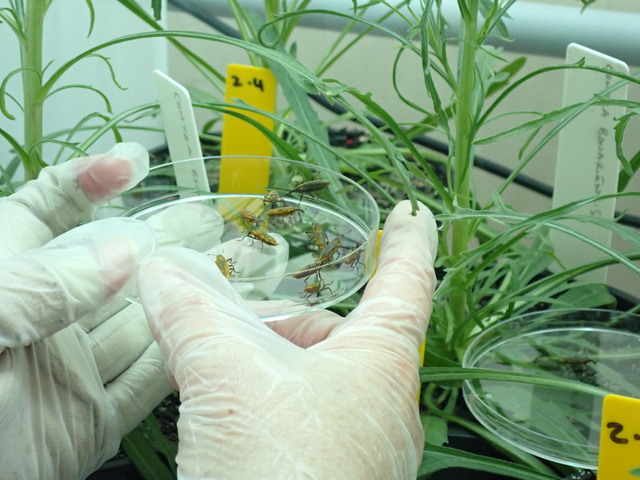
CSIRO is working closely with international collaborators in Brazil and France to identify and test fleabane’s natural enemies, and the stem-boring weevil, Lixus caudiger – native to South America – has shown promising results from early trials.
This specific weevil feeds on fleabane leaves and stems, while its larvae burrow inside the stem tissue, hollowing out plant structures and weakening them until they collapse.
The internal feeding often prevents the weed from flowering and setting seed, cutting into the weed’s ability to spread.
The colony of weevils, housed in CSIRO’s quarantine facilities, is undergoing further testing, with researchers carefully monitoring feeding, mating, egg-laying and larval development across a wide range of test plants.
If the insect proves safe and effective, CSIRO will prepare submissions for regulatory approval before any potential field release.
The weevil is the focus of CSIRO entomologist Dr Michelle Rafter’s research and one of several new potential weed biological controls unveiled by Dr Ben Gooden in a recent keynote presentation at the South Australian Weeds & Pests Conference.
Dr Gooden said the weevil research was part of a broader push to expand weed control options as part of GRDC’s weed management investigations.
“The weevil is just one of four promising fleabane biocontrol candidates, but it’s shaping up as potentially one of the most impactful,” Dr Gooden said.
CSIRO principal research scientist Dr Michelle Rafter said her team researching the weevil was witnessing promising signs that Lixus caudiger was highly specialised to fleabane, while not causing any damage to the crops themselves.
“So far, our testing shows the weevil is restricted to fleabane and its close relatives,” she said.
“That’s exactly what we want in a biocontrol agent, something that hones in on the target weed without threatening native plants or crops.”
Flaxleaf fleabane has become a headache for farmers across the northern, southern and western grain growing regions, where it flourishes in non-cropped areas like fence lines and roadsides, sending clouds of wind-borne seed back into cropping paddocks.
GRDC weeds manager Sarah Morran stressed the importance of identifying cutting-edge weed control innovations on behalf of grain growers and said investment in biocontrol was a priority because of its potential for cost-effective, long-term weed suppression.
“Weeds cost growers significant amounts of money and impact on crop yields,” she said.
“By investing in innovative approaches like biocontrol, we’re helping growers tackle herbicide resistance, using nature’s own checks and balances to help manage weeds more sustainably.”
Weed biocontrol is not designed to eradicate weeds but to reduce impact and allow other management practices to be more effective.
“Weeds like flaxleaf fleabane won’t be beaten by chemicals alone,” Ms Morran said.
“Integrated solutions, including biological control, could offer a sustainable pathway to protecting yields and profitability.”
While it may take several years before the weevil could be released into paddocks, the CSIRO research team was optimistic.
“Finding a safe, effective biocontrol agent takes patience, but the payoff is worth it,” Dr Rafter said.