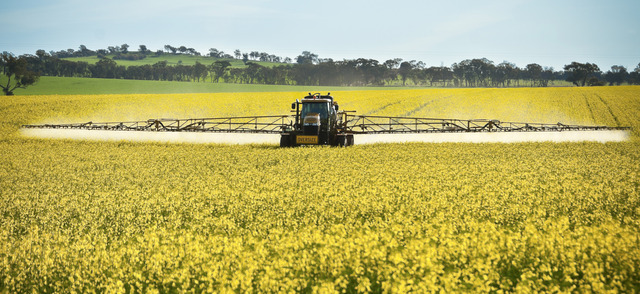
Crop pathologists and fungal disease experts are concerned about the increasing use of precautionary fungicide applications in Australian canola.
Repeated applications of a single fungicide as ‘cheap insurance’ against disease could have serious long-term consequences.
Associate Professor Fran Lopez-Ruiz, project lead for the Australian Fungicide Resistance Extension Network (AFREN), a Grains Research and Development Corporation (GRDC) investment, said fungicide resistance posed an ongoing threat to canola production, with frequent and repeated application of the same fungicide group being one of the main drivers.
“Repeated use of fungicides from the same chemical group, especially when there’s no clear evidence of yield benefit, can drive the development of fungicide resistance within disease populations,” he said.
Fungicide resistance means a fungicide is no longer effective for disease control and denies growers the option to use the affected fungicide group.
This loss increases reliance on other registered fungicide groups, increasing the risk of multiple fungicide resistance scenarios.
Spores released by fungicide-resistant fungi can spread over large areas in a short time.
This means overuse of fungicides and poor disease management practices on a single farm can quickly become a regional problem.
“We are seeing this with net form net blotch (NFNB) of barley in parts of South Australia, Western Australia and Victoria,” Mr Lopez-Ruiz said.
“NFNB pathogen populations with triple fungicide resistance to all three registered fungicide groups have limited growers’ options for protecting their barley yields. This is why AFREN recommends a targeted approach to fungicide application – only apply fungicide when necessary and when there is a clear economic benefit from doing so.
“Even then, different fungicide groups should always be used in rotation so any pathogens with fungicide resistance or reduced sensitivity will be controlled by one of the treatments.”
The comparison between NFNB of barley and blackleg of canola should not be taken lightly, according to Dr Steve Marcroft of Marcroft Grains Pathology.
Blackleg with reduced sensitivity to Group 3 fungicides prothioconazole, fluquinconazole, flutriafol and tebuconazole is present in SA, New South Wales, Victoria and WA.
There is a high likelihood of resistance developing with the potential for field failure in pathogen-conducive environments.
Mutations for reduced sensitivity to Group 7 SDHI fungicides and Group 12 fungicide fludioxonil, the only other fungicide groups registered for blackleg control, have also been detected in SA.
There is a potential for reduced sensitivity to these two groups under high disease and fungicide selection pressure.
Dr Marcroft said he has received several enquiries about using double rates or off-label timings to help control blackleg or mitigate efficacy issues due to fungicide resistance.
“Both practices are illegal as label rates and requirements must be followed – and they will also contribute to increased levels of fungicide resistance,” he said.
“Fungicides must only be applied in accordance with label recommendations and only used when disease pressure is high and there is a clear risk of yield loss.
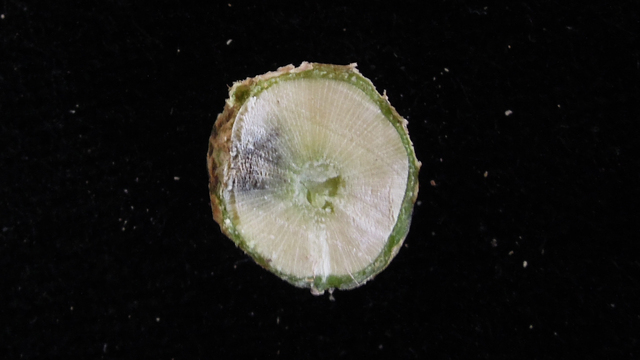
“It’s important to remember that canola plants can tolerate a significant amount of disease before any yield loss occurs – typically up to 20 per cent crown canker infection. So, while skipping early foliar applications will lead to a small amount of crown canker, this is unlikely to result in yield losses but will have a massive impact on minimising the risk of fungicide resistance evolving.”
Low levels of Upper Canopy Infection (UCI) are also unlikely to impact yield.
Furthermore, applying fungicide after 50 per cent bloom can breach maximum residue limit (MRL) restrictions.
“If fungicides are used to excess when disease pressure is low or there is no threat to yields, they may no longer be effective when we genuinely need them,” Dr Marcroft said.
“What may seem like cheap insurance now could actually be a longer-term risk to canola production.
“Weighing the pros and cons of a fungicide spray with your agronomist is a much better investment.”
Growers should also follow the ‘AFREN Fungicide Resistance five’ principles for integrated disease management.
This includes planting canola at least 500 metres from the previous season’s stubble, using time of sowing to manage disease risk, and using more resistant varieties and rotating them.
More information is available from afren.com.au