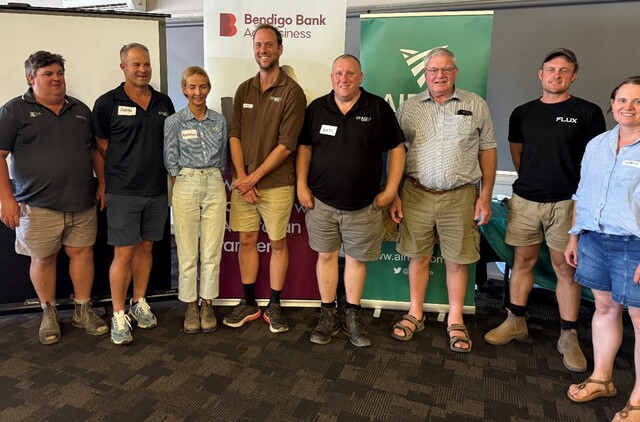


More than 100 Eyre Peninsula farmers have started planning for the 2025 growing season after receiving the latest information from industry experts in soil and crop nutrition and management.
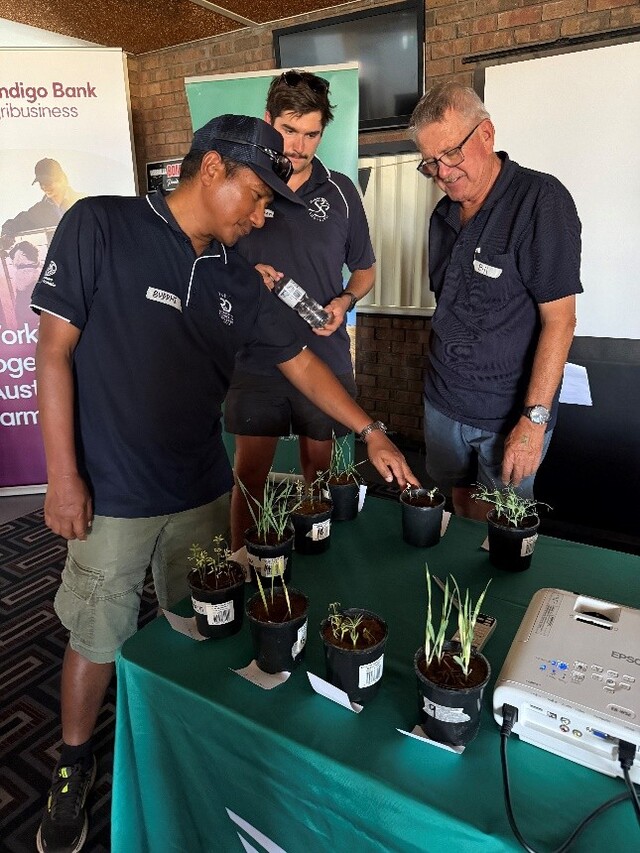
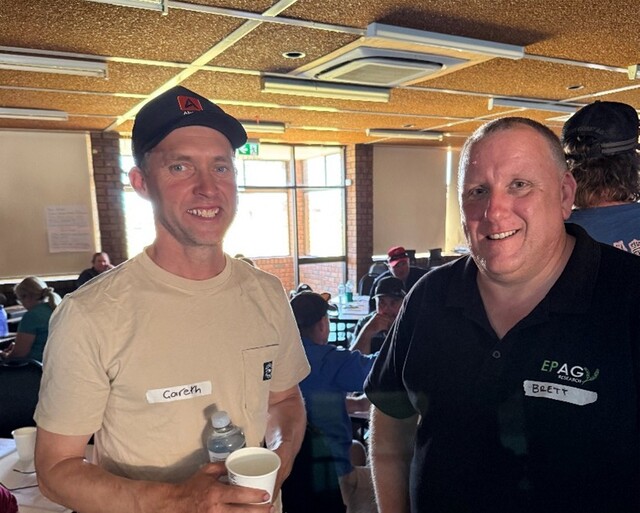
Ag Innovation & Research Eyre Peninsula (AIR EP) held three Pre-sowing Member Days across the region at Wirrulla, Kimba and Ungarra last month, attracting 191 farmers, researchers, advisors and industry representatives.
Farmers and local advisors received information about specific soil types, nutrition requirements, stored soil moisture levels, frost risk and chemical residue – all of which will be critical to maximising crop potential for the season ahead.
AIR EP executive officer Naomi Scholz said the events gave members valuable information to inform their on-farm decision-making, as well as the chance to question industry experts.
“After the challenges of last season, our grower members were particularly keen to understand how they could use the lessons learned from 2024 and the latest in our research findings to start planning for a more productive season this year,” she said.
“The Pre-sowing Member Days brought together farmers, researchers and industry leaders to share valuable knowledge, and give growers the chance to ask questions and dig deeper into the science looking for opportunities to improve their on-farm practices.”
Facilitated by Ag Consulting Co principal director and AIR EP board chairperson Bill Long, the event program ensured maximum opportunity for attendees to discuss their thoughts, experiences and ideas with peers, while engaging with speakers and industry experts.
Michael Moodie of Frontier Farming Systems shared his tips for growing legumes on ameliorated sandy soils.
He emphasised the importance of understanding individual soil constraints and applying the right amelioration treatment to get the best yield and ground cover results.
Timing and crop selection following the ripping phase were highlighted as important considerations for farmers and advisors when crop planning, with pulses demonstrated to do well after ripping.
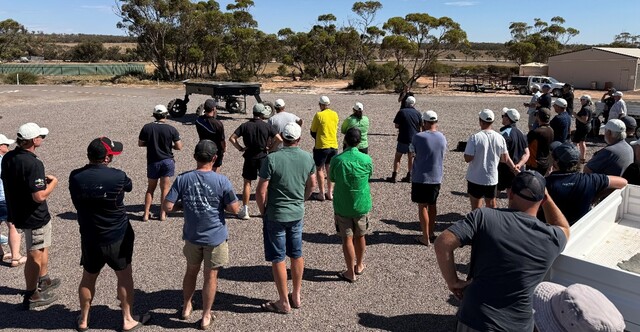
Advances in farm technology are always a hot topic and growers were treated to a robotic weed sprayer demonstration from Jordy Kitschke of Flux Robotics.
He provided an overview of the ‘Flux Rover’ – developed in conjunction with farmers in the Mid North looking for solutions to reduce labour requirements and manage broadleaf weed control in lentil crops.
Farmers will need to be aware of soil nutrient deficiencies for the coming season.
Brett Masters of EPAG Research shared the 2025 soils surveillance results, which show potassium deficiencies are being seen across the region, particularly in sandy soils.
Sulphur deficiency is also being monitored, especially in canola, and some phosphorus deficiency and Sakura damage was noted in the 2024 season in early established crops through to tillering.
Understanding stored soil moisture levels will be important this year and JEPAG Research’s Jake Giles demonstrated that soil moisture is available in the soil profile on some select soil types, in specific areas.
Knowing which soil types are likely to have pockets of stored soil moisture at certain depths can be used as a tool to help growers prepare their cropping program and calculate nitrogen requirements based on their yield targets.
When revising soil nutrition requirements, farmers should remember the ‘4Rs’, according to the CSIRO’s Dr Therese McBeath – being Right Rate, Right Placement, Right Timing and Right Source.
She recommended farmers start by setting their yield target for the 2025 season, then work backwards to determine fertiliser rates.
Local independent agronomist James Cant of AGRA Agronomy provided a solid overview towards the current landscape of herbicide residues potentially lurking in soils due to prolonged dry conditions.
He encouraged farmers and advisors to approach the coming season with caution and exercise strategies including small-scale herbicide residue plots in paddocks and tissue testing to help identify any risks that may exist.
James went on to explain that many factors impacted how chemicals break down in differing soil types.
Using a traffic light system for crop selection based on potential frost damage could also help farmers in their decision making for 2025.
Rhaquelle Meiklejohn from EPAG Research gave members an insight into the use of frost zoning, and crop selections per zone, including green (no frost risk – peas, quick wheat, slow wheat), amber (medium risk, does not get frosted every year – canola, lentils, barley) and red (high frost risk, almost every year – sheep, summer crop, beans, hay).
The agronomy sessions were summarised by lessons learned from 2024’s growing season, with Andrew Ware of EPAG Research delivering the data and recommendations on how to apply it to the coming growing season.
At the Ungarra event, Andrew opened his presentation with updated information regarding SDHI fungicide resistance detected in the blackleg fungus in canola.
He encouraged canola growers to take steps to reduce fungicide resistance developing, after a detection of SDHI fungicide resistance in the blackleg fungus from samples taken from Eyre Peninsula.
The resistance was detected as part of routine monitoring and surveillance for the emergence of fungicide resistance.
Routine monitoring has been conducted in other canola growing regions.
Some of the recommended strategies for farmers included:
• Select cultivars with high blackleg rating to reduce reliance on fungicides for controlling blackleg.
• Plant this year’s canola crop at least 500m away from last year’s canola crop (or any other brassica crop).
• In areas where resistant isolates have been detected, if using a SDHI as a seed treatment or foliar application, use an effective fertiliser/in-furrow treatment combination, tank mix or co-formulation with an alternate mode of action that includes a DMI (Group 3) or QoI (Group 11) fungicide.
Further information on SDHI fungicide resistance can be found at grdc.com.au/resources-and-publications/all-publications/paddock-
practices/2024/southern/december/sdhi-fungicide-resistance-detected-in-the-blackleg-fungus
Andrew Polkinghorne, a 2023 Churchill Fellowship, shared his insights into liquid phosphorus, which is highly responsive in calcareous soils.
Visiting USA, Canada, UK, Belgium, the Netherlands and Germany, Andrew shared his fellowship findings with the audience, detailing his experience using liquid P in his own farming system.