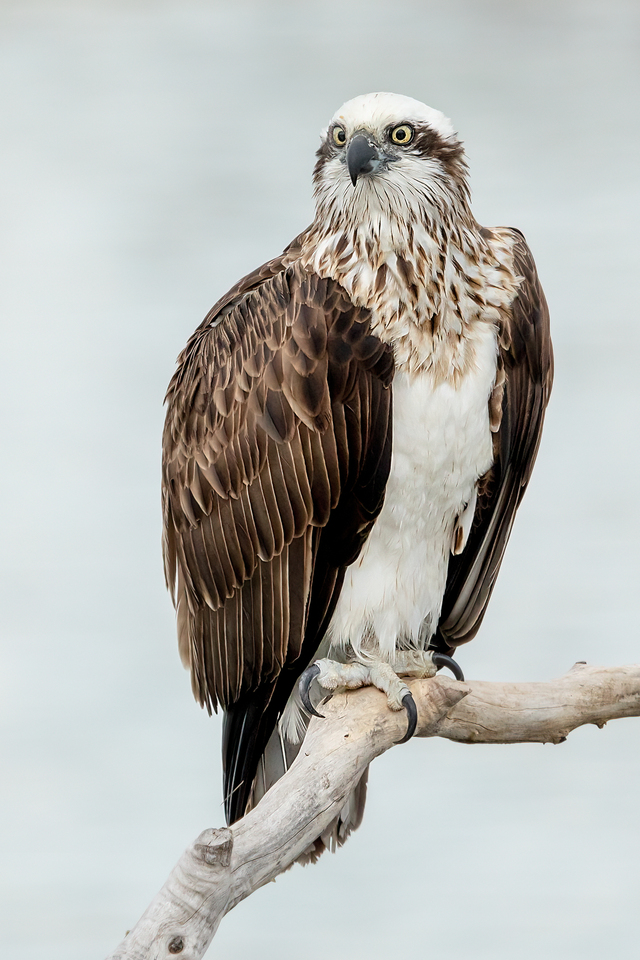
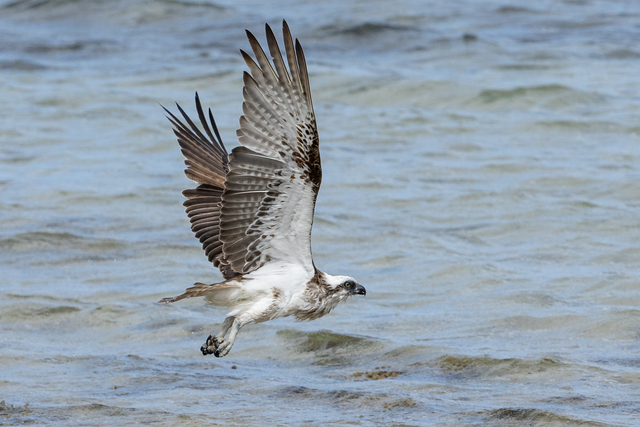
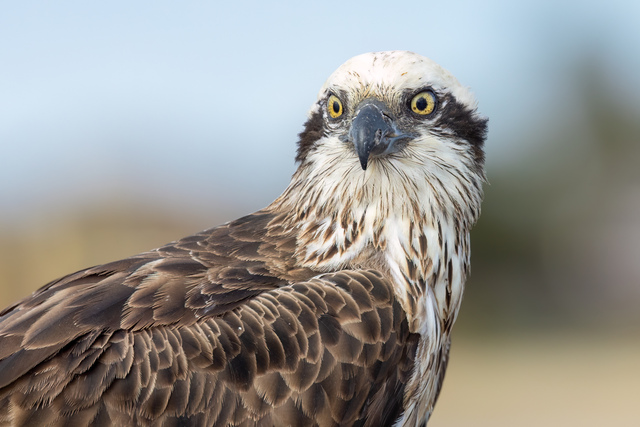
Volunteers are helping to better understand the endangered eastern osprey – with Eyre Peninsula citizen scientists keeping watch of nests and reporting sightings of birds.
Earlier this year Friends of Osprey South Australia submitted its first nest and osprey monitoring report to the Environment and Water Department.
There has been strong interest in the birds of prey – which has only grown since the first young were banded for identification, before leaving their nest on The Barge in Port Lincoln, in 2019.
In addition to bands, some fledging chicks have also had monitoring devices attached – allowing for satellite monitoring.
Friends of Osprey South Australia vice-president Fran Solly said information gained by this, as well as from interested people reporting bird sightings, was helping to increase the knowledge about the raptors.
“There are at least 26 breeding pairs of osprey on Eyre Peninsula through to the West Coast, past Fowlers Bay,” she said.
“In addition there are known individual birds that are not yet breeding.
“Indications are that the numbers are increasing but more monitoring is needed to confirm this is the case.”
A total of 34 osprey nests were monitored across SA from June 2025 through to the end of January 2026.
Fifteen of those were on Eyre Peninsula, with EP volunteers putting in about 75 hours in nest monitoring alone.
Nine fledglings of the 16 fledged chicks from monitored nests in that time came from Eyre Peninsula and the West Coast.
Two successful fledgings were recorded at each of the following nests – Cheetima Beach (nee Coorabie), Streaky Bay, Whalers Way, Lincoln National Park and one on Thistle Island.
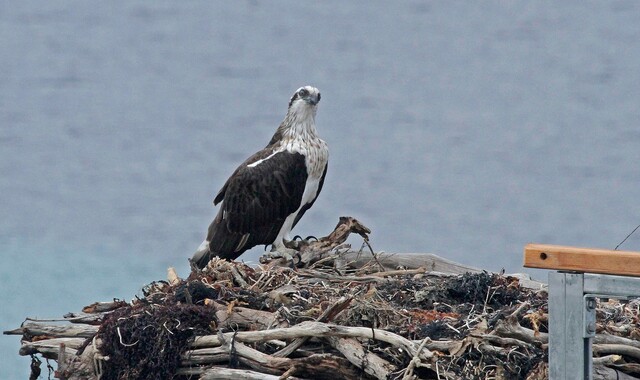
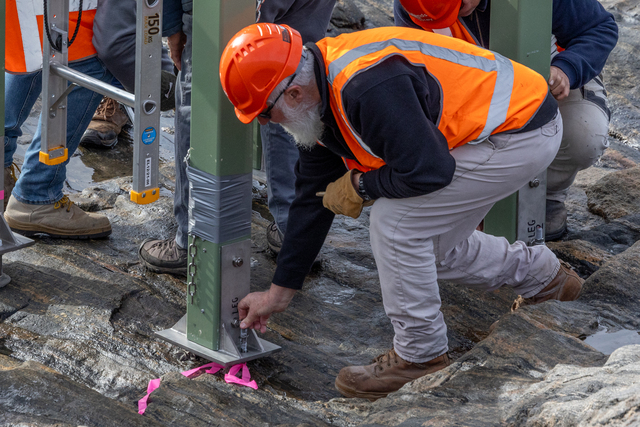
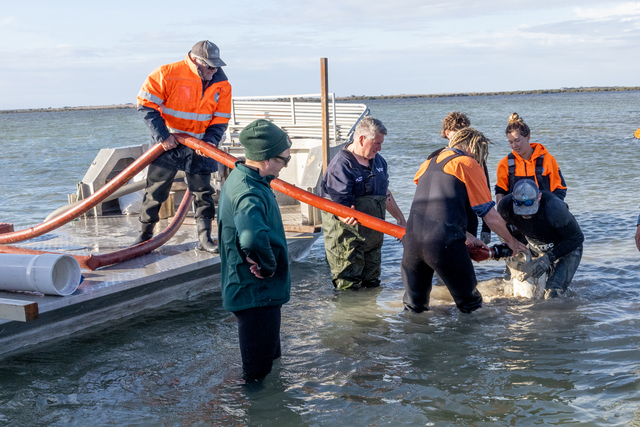
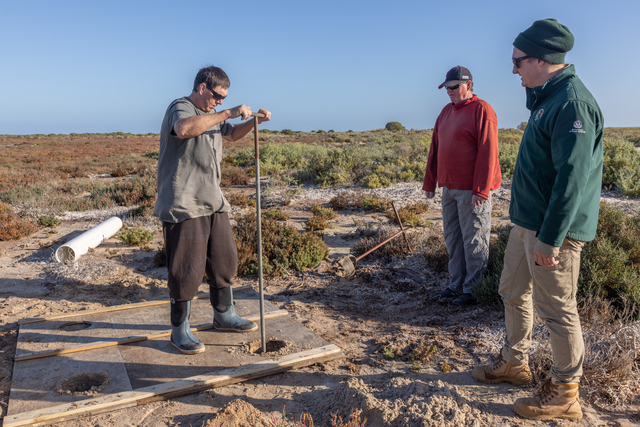
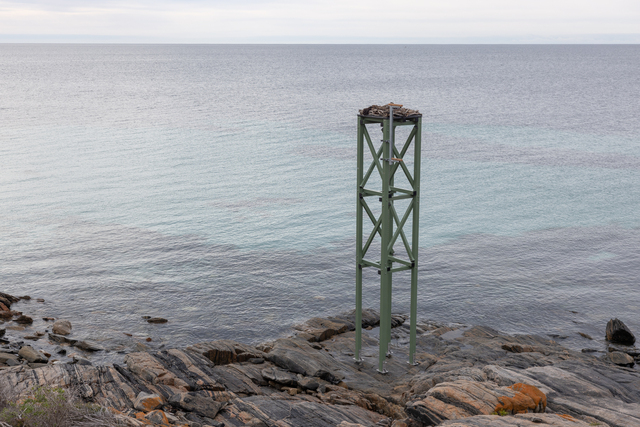
There have been 10 nest platforms installed across Eyre Peninsula in recent years – giving the osprey more places to lay their eggs, and hopefully raise their chicks while within close proximity of the sea to search for food.
Angel Oysters put one nest in place on one of its leases at Streaky Bay in February.
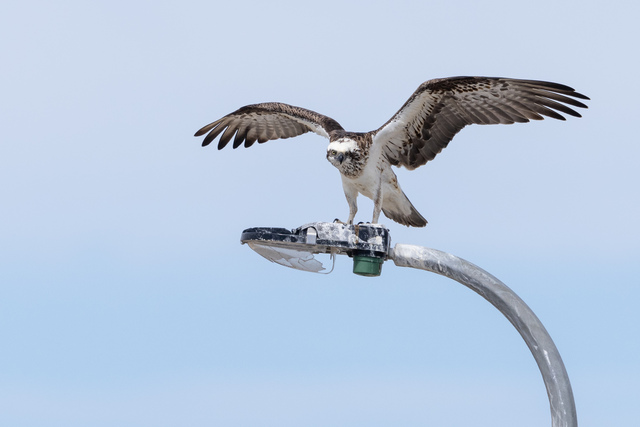
In addition, Friends of Parnkalla Trail recently erected three safe perches along the Port Lincoln foreshore to provide the resident osprey with a safe place to perch.
Fran said the Parnkalla Trail perches were installed because osprey had been seen perching on a dead tree too close to Lincoln Highway, which had posed a risk of them being hit by vehicles if they took off into the wind and crossed the road there.
“There are currently 10 platforms on EP so the focus shifted from erecting platforms to monitoring to determine if more are needed and where,” she said.
“Discussions are underway with the Elliston Area School and community to determine if there is a suitable location there to erect a platform, as there are known to be osprey in the area, who have struggled to find a nest site that is suitable.”
Another danger faced by the osprey is electrocution – and this is one area where Fran said EP residents and visitors could help out.
SA Power Networks has committed to ensuring power poles used by osprey and other birds of prey are made safe with animal guards.
Fran called for people to report any incidences of osprey seen perching on power poles to be reported – with pole number and GPS location.
“If you know of a pole that is a potential risk accessing and filling in a form and sending it through to us at friendsofosprey@gmail.com will enable us to get it checked and made safe. “
SA Power Networks would then check the pole for safety and fit a guard if necessary.
There are two known cases of osprey electrocution in recent years – the most well known was when the first satellite tracked South Australian osprey Solly, named after Fran, was electrocuted near Streaky Bay in 2021.
Fran said more recently a large female, who was a partner to Calypso was found electrocuted at Tulka in 2024.
“Power poles are also not safe places for them to perch so these artificial perches give them safe options and have been located where they like to forage,” Fran said.
There were five banded ospreys sighted on Eyre Peninsula during the most recent breeding season – June 2025 to the end of January 2026.
These are Calypso – a 2019 male hatched from the Port Lincoln Osprey Barge.
He has a blue and metal band and is most often reported in the Tulka area, where he appears to have adopted the artificial nest platform but is yet to breed.
“Ervie is a 2021 hatched male from the Port Lincoln Osprey Barge and he ranges from Point Boston to the Port Lincoln wharf with occasional trips out to the national park,” Fran added.
“Bradley 2023 a male from the Port Lincoln Osprey Barge, who has been regularly seen around the mouth of the Tod River through to Louth Bay.
“Another male, Gilliath, [is] also from the barge in 2023 and has been resident on the north shore of Port Lincoln since leaving the nest.”
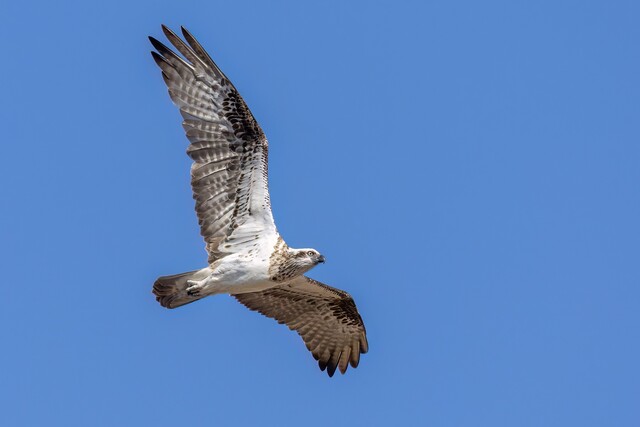
Satellite tracking of some of the osprey first began in 2019 and has provided knowledge about how far some osprey travel, while others appear content to stay close to where they hatched and fledged.
Fran said a 2022-hatch male from Price, on Yorke Peninsula, has been sighted around the mangroves south of Cowell through to Port Gibbon.
“The data shows that female birds banded here tend to leave the area – some doing incredible flights many hundreds of kilometres and not always in the right direction,” Fran said.
“Some have been tracked as far north as Woomera and if/when they do make it back to the coast they are often exhausted and don’t survive.”
She said two EP-hatched male birds, Ervie and Gilliath, seemed to enjoy each other’s company.
“They roost on the wharf at night and don’t seem to be at all bothered by shipping activity,” Fran claimed.
“The Barge pair (Mum and Dad) have been together for at least 10 years and despite last year’s nest failure it is hoped that they will return to the barge in the coming months and that 2026 will be a successful season for them.”
Osprey mate for life, unless one of the pair dies, in which case the surviving bird will continue to defend the nest and introduce a new partner.
Anecdotal evidence shows that when drilling began for the Billy Lights Point desalination plant – it coincided with nesting birds on the Osprey Barge in Port Lincoln leaving the nest.
“On 10 October 2025 the female on the Port Lincoln Osprey Barge left her eggs for an extended period of time. Prior to this the eggs had never been left untended for more than three minutes,” Fran said.
“In the coming few days she would leave her eggs more and more, eventually leaving them so long that incubation stopped.
“The eggs were tested for viability and found to have almost fully developed but deceased foetuses.”
Fran added the only known environmental change during this time was the start of drilling at Billy Lights Point for the desalination plant.
“A large crane was clearly visible from the barge and noise from the drilling could be heard in the area,” she said.
“Osprey are known to abandon eggs when there is visual and noise disturbance within a two-kilometre radius of the nest.”
She said it was too early to see what effect the algae bloom had on the osprey.
“So far Eyre Peninsula and the West Coast have been relatively clear of algae bloom around the osprey breeding territories,” Fran said.
“In other parts of the state monitors have reported observing birds have to fly further from the usual foraging locations in search of fish and there are reports from Kangaroo Island of birds eating dead fish.
“The long-term effects will continue to be monitored.”
Other risks to osprey come from both humans and animal and bird predators.
People driving on beaches is not an issue for osprey on EP but certainly is in at least one location of Yorke Peninsula.
Dogs running off leash can disturb osprey foraging and resting, as osprey will take flight if there are dogs running unrestrained.
Fran said dogs should be on lead on beaches for all of the birds that call the beach home.
People wanting to take photos of osprey should also give them space – especially if they are at or near the nest.
“We recommend viewing birds with a good pair of binoculars or a long camera lens (minimum 400mm),” she said.
“Osprey at the nest will leave the nest if people are too close and that opens the eggs to the risk of predation from ravens or other birds of prey. It also risks the eggs becoming too cool or too hot depending on the weather.
“If you accidentally approach a nest and see the bird fly and call, please walk away quickly so they return to their eggs or young.”
The endangered eastern osprey also has a number of predators hindering its numbers recovering.
Fran noted foxes were lethal where the birds had no choice but to nest on the ground on cliff faces.
“On Tumby Island a camera caught a fox take two eggs within 10 minutes,” she said.
“The birds won’t breed again that season so it’s a massive loss.”
In addition, she said ravens were a large source of disturbance to osprey.
“They attempt to take over nest sites and have been known to take eggs from the nest,” she said.
“They often work in pairs with one luring the osprey off the nest while the other prepares to take the eggs.”
Larger predators such as wedge tail or white-bellied eagles have been a problem for osprey on Kangaroo Island, but Fran said they had not been a “notable problem” on EP at this stage.
Other things EP residents and visitors could do, outside those listed above, included becoming a member of Friends of Osprey SA, report sightings of osprey to friendsofosprey.com.au/report-sighting-of-osprey or buying the book Marie’s Long Flight.
The book was written by Fran Solly and illustrated by Robyn Kilgour and tells the story of a Yorke Peninsula osprey Marie, whose satellite tracker showed her flying inland and getting lost, before successfully making her way back home.
Cost is $25 with all proceeds going to Friends of Osprey SA.
It can be bought online at clientstake2photography.com.au/marieslongflight