Lions hearing assistance dogs are life changing for people who are deaf – whether from birth, disease or as a result of an accident or injury.
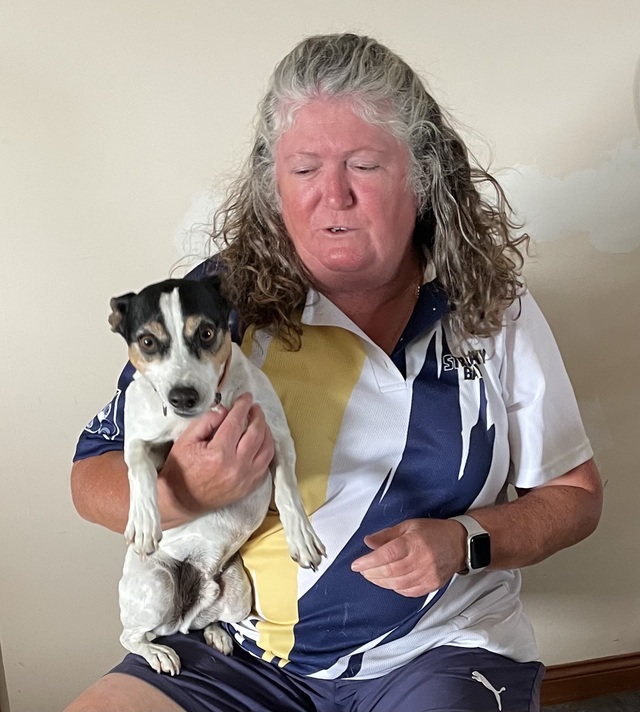
Hearing assistance dogs have become vital ears for four Eyre Peninsula people – one in Cleve, one in Cowell and two in Streaky Bay.
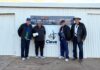
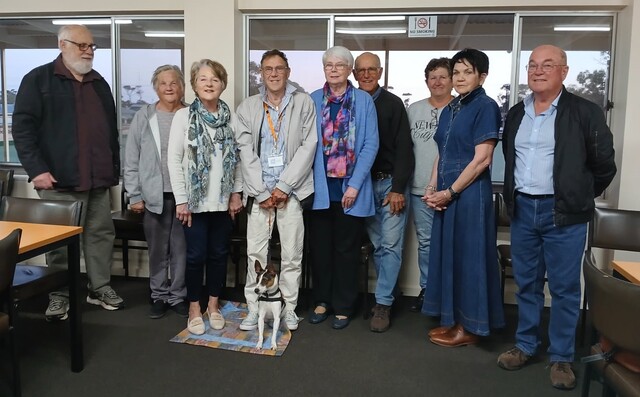
Cleve’s Phillip Turner is the most recent of those to receive a hearing dog, with Cleve Lions Club members and others in the community taking his dog Peter through his training sessions.
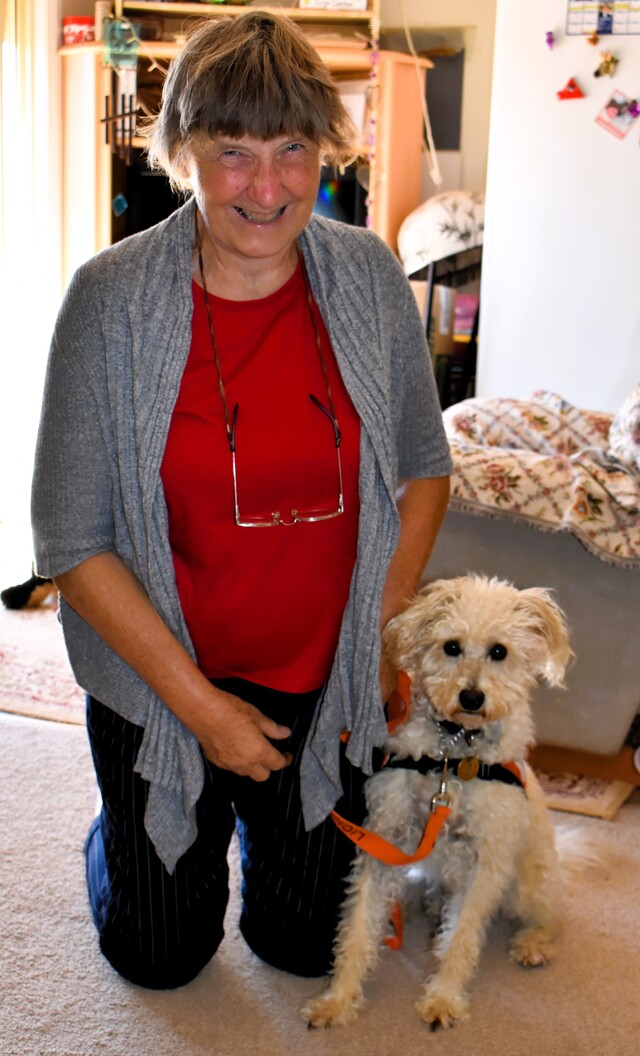
Likewise, Cowell Lions did the same for Barbara Bessant, with both her current dog Luke and her previous dog Nelly.
They also met the costs of bringing both dogs to Cowell from Adelaide.
However, that is not always the case with Streaky Bay SA Country Women’s Association members travelling to Sue Higgins’ home outside of the town to help her train her dogs, as the Streaky Bay Lions Club only reformed more recently.
However, thanks to many Lions Clubs from around Australia making donations to Lions Assistance Dogs it is able to provide the assistance dogs to Australians in need, free of charge.
The not-for-profit organisation is located in Verdun, South Australia and provides hearing assistance dogs, medical assistance dogs and psychiatric assistance dogs Australia-wide.
There is usually 12 to 18 months between someone applying for an assistance dog, by the time a suitable dog is found.
Phillip Turner has had very limited hearing since birth but did not receive his hearing assistance dog until July 2025.
Cleve Lions members and other volunteers from the community then spent the next three months helping Phillip’s dog Peter settling in and training.
Lion Lyndon Briese said eight to 10 people a week were involved with training them both each week, with three to four sessions weekly.
The first task was to help teach Peter about his new home and to respond to sounds.
“We trained Peter to learn how to respond and communicate with Philip in response to a door bell, door knock, phone response, smoking and sound alarm (and) oven timer cooking finish,” Lyndon said.
“We had a good response from community helpers as well as Lions such as a door knock, a door bell or someone calling out that they were there.”
Peter needed to react to heat alarms to warn of possible fire risk.
Trainers came from Adelaide on three occasions to assess both the community and Lions’ training and guide them going forward.
The hearing assistance dogs quickly become a much loved pet, but both the owner and the dog need time to learn how to work together.
All dogs are taught to alert to many of the same things, but some are trained for others, depending on their owner.
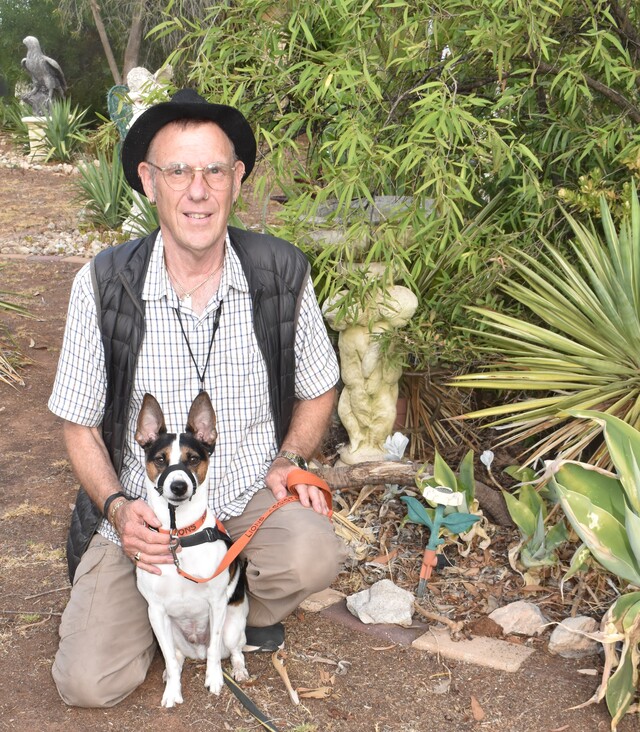
Nurse Sue Higgins of Streaky Bay got her first hearing dog Lara two decades ago, after separating from her husband.
Sue said she started going deaf when she was 12 and it got progressively worse over the years.
She also has a hearing aid in her right ear and a Cochlear implant in her left to improve her hearing as much as possible.
Her impetus for getting a hearing assistance dog came from her concern that she would not hear her son Josh if he suffered an asthma attack out of her sight.
Lara was a black border collie which Lions Assistance Dogs rescued from the RSPCA in Adelaide.
Sue was devastated when she lost him to a snake bite.
“She was my true soul mate,” Sue said.
Her second was a labrador cross Poppy, which she sadly lost after he took a bait.
She has had Ben for the past four or five years.
He is a tenterfield terrier, which the organisation is now breeding to have a regular supply of assistance dogs.
“I had my grandson living with me last year so he was able to alert me if he was crying,” Sue added.
Sue said she would not be able to continue her work as a nurse in Streaky Bay and Ceduna without a dog to alert her to her alarm ringing, as she was now unable to hear it herself.
She is allowed to take her dog to work with her, “but at the moment I am so busy to have time to toilet Ben”, when she works as a community nurse in Ceduna.
“I am doing a lot of community nursing and working in people’s homes”.
Sue said Ben travelled with her by plane when she was on holiday.
Her previous larger assistance dogs were assigned a free seat next to her when she travelled while the smaller Ben now sits on the floor at her feet.
A keen bowler playing in both the Thursday and Saturday bowls competitions, Ben is a frequent visitor to Streaky Bay Bowling Club.
However, she joked that he had been to more bowls clubs in Australia than most people.
A Lions’ hearing dog is essential to Cowell woman Barbara Bessant – who was born with a hereditary form of deafness.
Barbara said although she used a hearing aid that needed to be taken out for sleeping, so her dog was her only ears then.
However, even with it in, the extent of her deafness meant her hearing dog Luke was still needed.
She has used a hearing aid for 53 years and her condition has worsened, so that now Barbara is classed as legally deaf.
Barbara and her husband David Bessant moved to Cowell in 1993, but it was not until he died in 2000 that Barbara applied for a dog.
However, people cannot have a hearing dog at the same time as they have another dog, so it wasn’t until her old pet dog died that she was able to get her first assistance one.
She said that was because with more than one dog, they quickly reverted to regular dog behaviours and forgot about their hearing training.
“My first hearing dog was in 2001,” she said
That was a kelpie named Nelly and Barbara owned her for 16-and-a-half years.
She has now had hearing dog Luke, a poodle-terrier cross, since August 2019.
“There was eight months between dogs because I had Nelly,” Barbara said.
“I was put on a waiting list, but if you have never had a hearing dog there is a wait of about three years.”
“It takes about six to eight months to train – depending on the dog.”
She said puppies went to a foster home when they were six to eight-weeks-old, and returned to the training centre when they were seven to eight-months-old, depending on the dog and how much progress they had made.
Dogs then had another six or seven months’ training – including sounds specific to the owner they were going to.
These days they retire hearing dogs at 14, “because of the amount of work they do”.
Barbara said that would likely mean she would not have an assistance dog from when Luke hit that age until he passed away, as she would not rehome him with someone else as a pet.
She said she relied on Luke to alert her to many things in everyday life, including phones, someone at the door, a kettle boiling and the sound of the washing machine finishing.
Barbara has macular degeneration and should her sight get worse, she would need to get a dual purpose seeing and hearing dog.