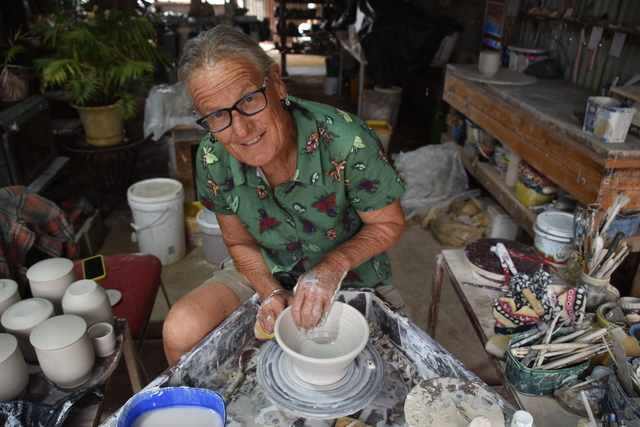
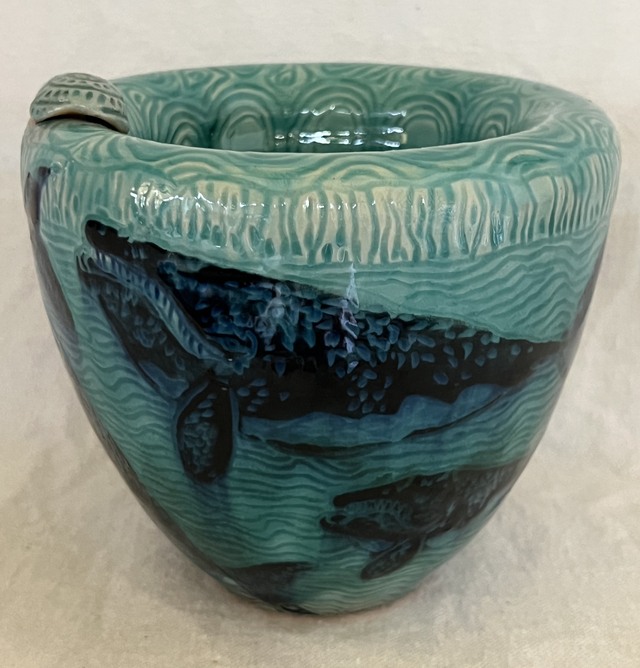
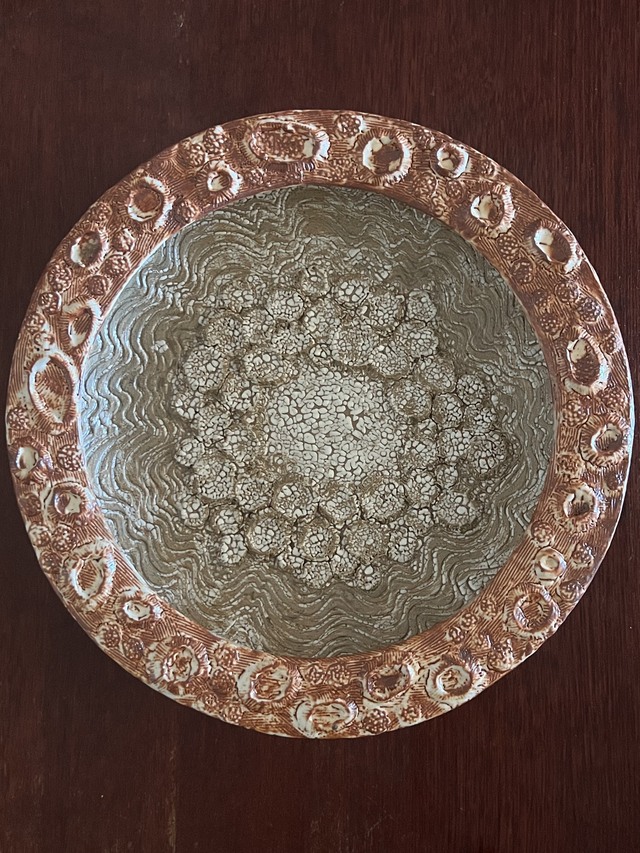
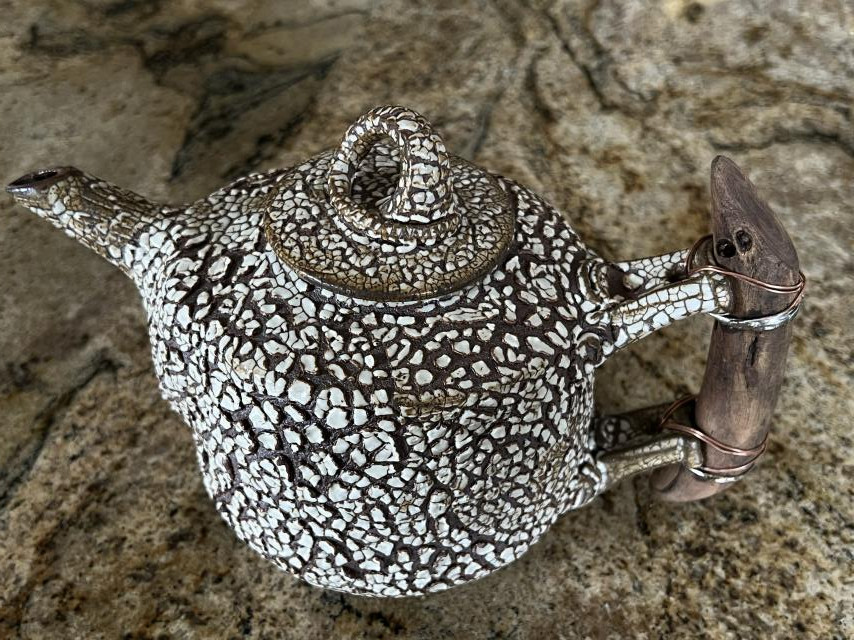
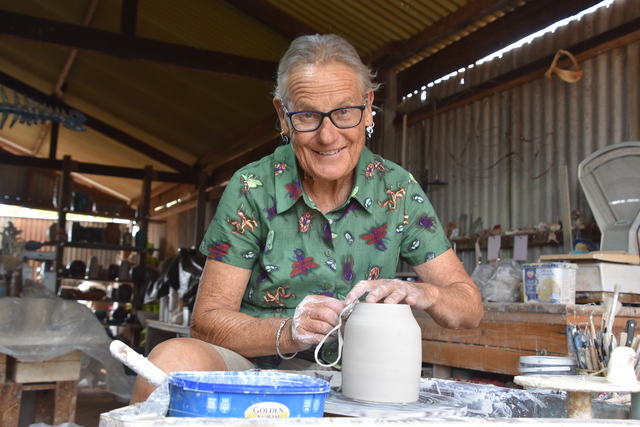
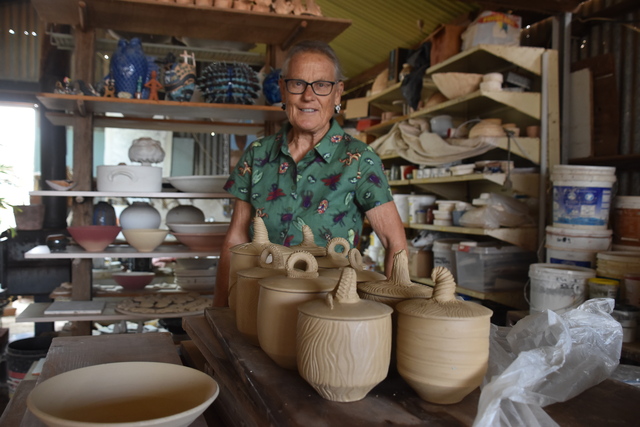
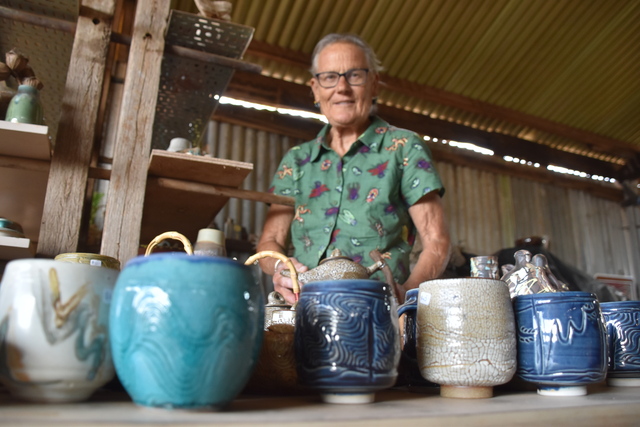
Renowned Ceduna artist Pam Diment continues to craft her passion for pottery and remains a creative force.
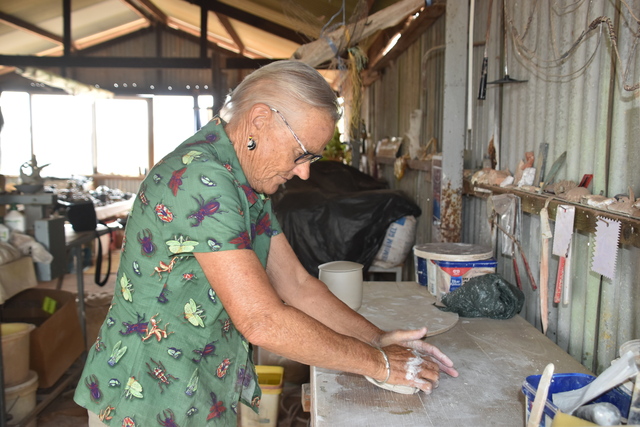
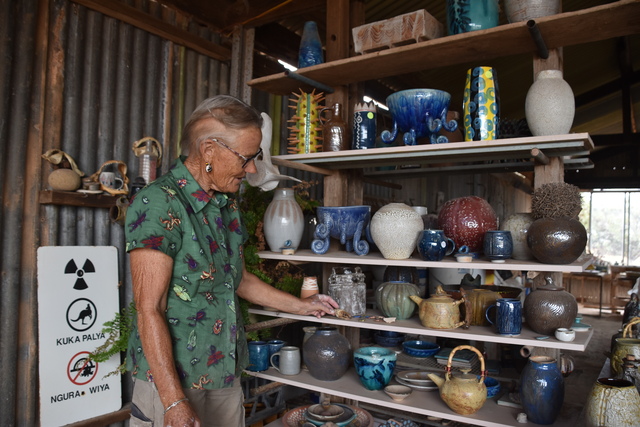
Out back of a Ceduna farmhouse, inside an old corrugated shed salvaged from Maralinga with a dusty dirt floor, is where the magic happens for a favourite West Coast pottery artist.
Pam Diment has been handcrafting ceramic art since she was a young girl finding her way in 1970s Ceduna, where a lifelong passion for pottery – and an emerging practice with a unique, earthy connection to place and country – were beginning.
The pursuit took Pam to Adelaide’s finest art school as a teenager, where she would stay and study ceramics for almost half a decade, before pottery once again set the artist on her next path – this time to the hinterland of the New South Wales north coast.
Now 70, and back at home on the West Coast for more than 30 years, Pam’s reputation as Ceduna’s most cherished ceramic artist remains, as does her passion for spinning clay.
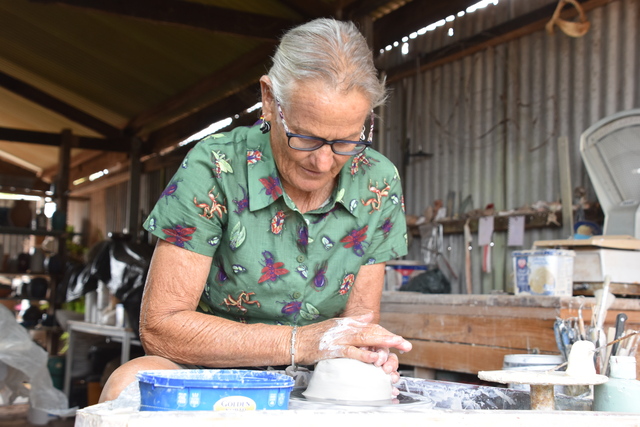
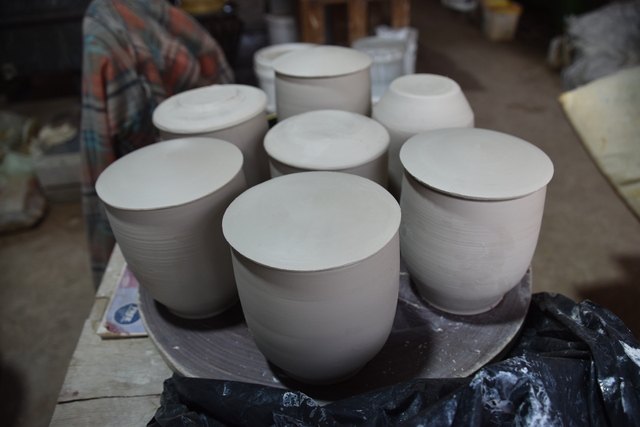
That she continues to create from her humble, rustic shed studio – dirt floor and all – will come as no surprise to those familiar with her work, which she not only crafts by hand, but uses a kickwheel to create her unique artworks, operates her own firings and creates her own glazes.
“As rough as my shed is, it’s a very special place. I love creating in there and coming up with ideas; sometimes you walk in there and the whole environment and energy changes, it’s hard to explain,” Pam said.
“I always call it my happy space, it’s where I create and feel really relaxed. If I could, I would spend seven days a week in there, but I usually take a break for weekends.
“Sometimes I wonder about it, because it is pretty primitive, and I see other potters around Australia and overseas, and I look at these beautiful nice studios and clean floors, but my studio has a dirt floor, it really is a bit of a classic, I love it.”
From Pam’s unique, personal and very West Coast shed come works that many people find special, if not just for their beauty, but their distinctiveness and practicality also.
“It’s seeing people use your work that is special for me, seeing people use things and knowing there’s nothing else like it, that they’re not mass produced, that you can’t go to a shop and get manufactured, perfect mugs that are the same.”
In a world where pottery has experienced a renaissance of popularity, where store-bought, shelf-ready clays and glazes are the norm, Pam remains true to her old-school roots and learning, such is the authenticity of Pam’s work.
Clay is the building block of her ceramic creations, which she finishes and decorates with her own glazes made from iconic Eyre Peninsula materials such as granite rock and mallee ash.
“Pottery has come back into fashion now, there’s people doing pots everywhere… I like to mix up all my own glazes to make it very individual,” she said.
“Going through art school, we had to do glaze technology, so that gave me a good grounding in setting up and doing your own glazes, where a lot of people who are up and coming potters these days, you can buy beautiful glazes off the shelf, there’s nothing wrong with that, it’s just a different way of attacking your work.”
Pam took a break from potting between 2004 and 2014, while she managed Arts Ceduna, with a particular focus on promoting Indigenous Australia’s connection with art.
“We helped Aboriginal people expose their artwork and develop their skills, I went on many cultural trips, as far as the Serpentine Lakes, I have felt very honoured and privileged,” Pam said.
“I love teaching, I love people being empowered through their work, that’s what the art centre was all about, teaching people how to use art to empower themselves and take control of what they were creating.”
Her near lifelong career in the arts has truly come full circle, for it was Ceduna art teacher Alison Kirk who once empowered a young Pam to follow her dreams in ceramics.
“I had a really good art teacher who got me into the pottery side of it; she really saved my life in a way, because she took an interest, I loved anything art. I never knew anything about pottery or anything like that, so she got me into it, doing a really old, very basic Japanese Raku technique,” she said.
“I built a kiln out on my father’s farm while still going to school – I would fire it up with the old tea tree posts they used to build the fences out of, I used to go around scrounging all that, because there’s not a lot of wood around here. Growing up on the farm, in those days, in the 1970s, Ceduna was very isolated, you didn’t have all the technology like we have these days, I had no idea what I wanted to do.
“I was just floundering around, Alison helped me get into the South Australian School of Art in Stanley Street. I owe her a lot, sometimes people come into your life and have that really big influence, I still keep in touch with her to this day.”