Australian grain growers have reduced their greenhouse gas (GHG) emissions intensity, while continuing to produce high quality cereals, pulses and oilseeds, according to a new Grains Research and Development Corporation (GRDC) report.
The new report by CSIRO, Australia’s national science agency, builds on work commissioned by GRDC in 2020 to establish a detailed and robust GHG emissions baseline (2005) for the Australian grains sector.
It shows the grains industry emissions intensity has reduced significantly, even as the total area under cropping increased nationally.
The report compares the GHG account for grain production for the financial year 2020-21 with the GHG baseline from 2005.
Despite higher fertiliser and an increase in total area under cultivation combined with increased yields, total net emissions were down by 50 per cent compared to the baseline, and GHG intensity was reduced by 64 per cent.
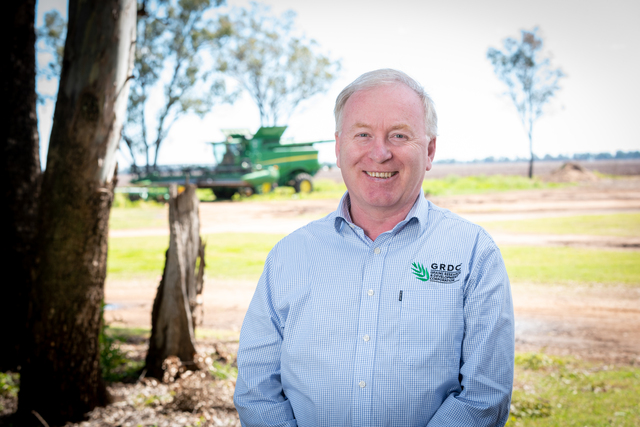
GRDC managing director Nigel Hart said the new values confirmed Australian grain growers were supporting world leading low emissions intensity grain production.
“Climate change and climate variability pose significant challenges to the Australian grains sector, but these challenges are also driving new opportunities for innovation,” he said.
“What we are seeing is growers increasingly adopting sustainable strategies that are allowing the grains industry to succeed from a profitability and productivity perspective while meeting evolving market, financial and consumer demands.
“This latest report builds on GRDC’s long history of investing in RD&E to help grain growers in adapting to climate challenges, mitigating impacts and managing industry-wide emissions.”
CSIRO senior research scientist Dr Maartje Sevenster led the research to update the latest GHG data.
Dr Sevenster said the new report is the first grains GHG account that could be compared to the baseline, with identical methodology aligned with the Common Approach for Sector-Level GHG Accounting for Australian Agriculture.
“This report showed total net emissions for 2020-21 were 11.2 million tonnes (mt) of carbon dioxide- equivalent (CO2-eq), with an emission intensity of 196 kg CO2-eq per tonne,” she said.
“It also highlights that the contribution from land use, land use change, and forestry (LULUCF) was strongly negative, indicating substantial net removals, especially through soil carbon sequestration in croplands.”
When excluding LULUCF emissions, total net emissions rose by 33 per cent, yet GHG intensity was still three per cent lower than the baseline.
Higher biomass production and improved fertiliser management may have contributed to soil carbon sequestration, revealing increased production leads to increased emissions as well as removals, overall reducing GHG intensity.
This was predicted using simulations in the previous grains GHG report.
However, currently the available data lacks sufficient resolution to establish a cause-and-effect relationship.
The report stressed the need for improved data collection on fertiliser and crop protection product use to better reflect practice changes.
“What the latest data indicates is Australia is producing grains at relatively low greenhouse-gas intensity which has national and global benefits,” Dr Sevenster said.
“This type of information is increasingly important for the Australian grains industry in maintaining access to global markets.”
Mr Hart said the report provided critical information for grain growers, who oversee roughly four per cent of Australia’s land – with about 22,300 grain farms spanning about 31 million hectares – in ways that deliver both economic and environmental benefits to the broader community.
“There are multiple drivers for the agricultural sector to investigate low emissions intensity opportunities, including market preferences, financial investment advantages and environmental considerations,” he said.
“International markets are looking to source grain grown with the lowest emissions and they should be looking at Australian grain growers.
“This latest data shows we are amongst the most efficient producers in the world.”
Further information on the report is available at grdc.com.au/about/our-industry/greenhouse-gas-emissions