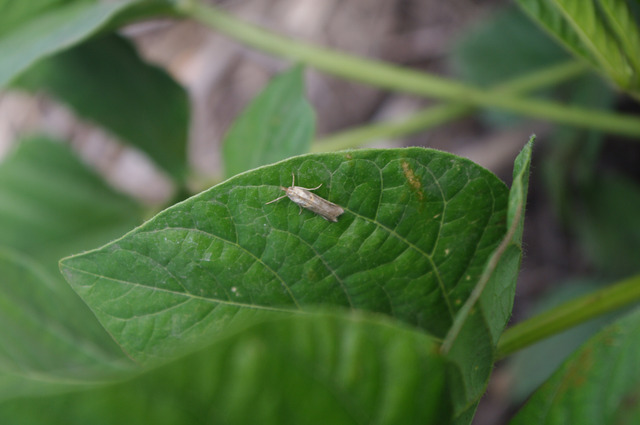
A new $24.79 million project is poised to revolutionise pest management for Australian grain and vegetable growers.
This initiative will prepare these key food production industries to reduce reliance on broad-spectrum insecticides and implement innovative strategies to manage pest populations and promote beneficial insects.
The Grains Research and Development Corporation (GRDC) is investing $10 million in the five-year-project alongside significant contributions from Hort Innovation ($5.59 million), the University of Melbourne ($5.75 million), and Cesar Australia ($2.25 million).
This investment, known as the Australian Grains and Horticulture Pest Innovation Program (AGHPIP), has four key areas: endosymbionts in pests; boosting beneficial insect populations; proactive resistance management; and communication and extension of key project outcomes.
The project is part of a nationwide move to bolster knowledge and awareness of pest management with practical, science-backed solutions and support on-farm practice change for grains and vegetable growers.
GRDC managing director Nigel Hart said the project aimed to transform Australian pest management strategies by reducing reliance on broad-spectrum insecticides and promoting sustainable, economically viable and environmentally sound pest management practices.
“It is challenging to put an overall total cost on the impact of invertebrate pests on the grains industry alone, but across the six major Australian grain crops, the estimated annual loss exceeds $350 million,” he said.
“Cultural and chemical controls play a critical role in ensuring growers can effectively manage pests, but as an industry we are currently heavily reliant on insecticides.
“By integrating beneficial insects and innovative pest control technologies, the project will enhance the overall health and productivity of grain and vegetable crops, contributing to long-term industry resilience and sustainability.”
Mr Hart said the commitment by Hort Innovation reflected the importance of this project across the agricultural landscape.
“Hort Innovation’s interest in joining the next project underscores the industry-wide significance and value of this research,” he said.
“This cross-RDC investment is crucial for the horticultural and grains industries, driving innovation and sustainability in pest management.”
Hort Innovation chief executive officer Brett Fifield said the partnership would support the vegetable industry transition to a more proactive and sustainable approach to integrated pest management.
“Our vegetable growers tell us that strengthening the industry’s readiness for existing and emerging opportunities and threats in relation to pest management is a key priority,” he said.
“Joining forces with GRDC to find solutions to our shared challenges is an effective way to equip vegetable and grain growers with the right tools and practices to manage pests and safeguard their production of quality crops.
“The new project builds on a previous successful GRDC investment partnership with the University of Melbourne and Cesar Australia, which resulted in significant advances in pest research and innovation.”
This new initiative will be led by Professor Ary Hoffmann at the Pest and Environmental Adaptation Research Group (PEARG) at the University of Melbourne, in collaboration with Cesar Australia.
University of Melbourne dean of science Moira O’Bryan said her organisation was pleased to continue the critical work being done for grain growers in improving pest management.
“The University of Melbourne has the will and the skill to tackle the complex problems facing the Australian grains industry and all who depend upon it. We are proud of our joint achievements with the GRDC to date,” she said.
“This investment strengthens our partnership so we can continue translating our world-leading research into innovative solutions for the grains industry, enhancing the productivity and sustainability of Australian agribusinesses, communities and ecosystems for the long term.”
GRDC pest manager Leigh Nelson said the national research project was committed to delivering a comprehensive suite of innovative tools and practices to growers and their advisers by 2029.
“We understand the pressure grains and vegetable growers are under to future-proof their sectors, as we move towards reduced reliance on broad spectrum insecticides,” Dr Nelson said.
“Through this investment we aim to deliver endosymbiont-based pest control, precision resistance management, beneficial insect adoption strategies and overall enhanced pest management effectiveness, reduced economic impact and increased sustainability in production.”
Dr Nelson said Cesar Australia’s involvement was critical to the success of the project as its expertise in pest management, coupled with strong connections to growers and industry, ensures innovative research would be effectively translated into practical, on-farm solutions for growers.
Cesar Australian director Andrew Weeks was also confident ongoing research into this critical area would reap rewards for the plant industries.
“This new project is a bold attempt to reduce production risks caused by invertebrates and their associated viruses and aims to help Australian growers by minimising the uncertainty around pest management,” he said.
University of Melbourne researcher and project lead Professor Hoffmann said the initiative comprises a mix of projects offering both short-term and long-term benefits to grain growers.
“In the short term, we are developing new molecular tools for rapidly assessing and predicting pesticide resistance, and new approaches to reduce the impacts of pesticides on biocontrol agents,” Professor Hoffmann said.
“While in the longer term, we are developing endosymbiotic bacteria as new targets for pest control and new tools to improve the efficacy of natural enemies.”