New research will push the limits of water productivity and cereal yield potential in low (LRZ) and medium-rainfall zones (MRZ) to assist grain growers in these regions achieve new yield frontiers.
Underway now in South Australia and Victoria, research is led by CSIRO, with investment from the Grains Research and Development Corporation (GRDC).
It brings together researchers, farming systems groups, agronomists and communicators to investigate how tactical agronomic strategies can achieve aspirational yield targets by having more appropriate crop checkpoints throughout the season.
As part of the investment, CSIRO is partnering with a number of organisations, including Eyre Peninsula’s EP Ag Research and Ag Innovation and Research Eyre Peninsula.
The new research project ‘Profitable Yield Frontiers in the Southern LRZ and MRZ’ will provide new insights into raising yield potential in environments where water is the limiting factor.
It builds on the Hyper Yielding Crops project, which successfully indicated new benchmarks for the productivity of cereals in the regions of Australia where water supply was not limited.
The new project aims to ensure wheat and barley growers in the low and medium-rainfall zones better understand the role of tactical crop management in yield determination and its impacts on profit across a range of season types.
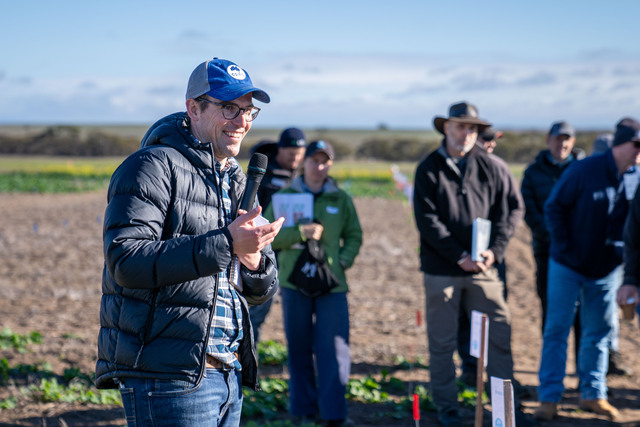
CSIRO farming systems researcher and project leader Dr Kenton Porker said the research would push yields as close to the current yield frontier or beyond and link to the decisions most likely to reliably and economically achieve these yields.
“Previous research in the HRZ (high-rainfall zone) lifted yield expectations, which meant growers in the MRZ and LRZ were questioning what was possible in their own environments,” he said.
“Agronomic systems in the LRZ and MRZ differ from high-rainfall areas mainly due to water limitations and greater variability in supply.
“For example, during the 2024 season we have seen conditions deteriorate in many parts of the southern region, which contrasts with previous spring conditions. So, the question becomes, how do we manage this seasonal variability where crop conditions transition between high and low water supply?”
He said key tactical decisions that drove yield happened early, particularly at sowing, leaving less room to adjust crop management during the season.
“This demands a fresh approach to managing the yield-determining period before flowering,” Dr Porker said.
“Growers understand water use efficiency (WUE), but this is usually assessed after the season. Traditional agronomy relies on predictable outcomes, often with hindsight, like post-season WUE analyses.
“Our research focuses on tactical agronomy, emphasising real-time decisions at critical points, such as sowing, tillering, and stem elongation. Growers need a better grasp of how to set crops up for success, capturing yield potential in good seasons and managing resources if conditions worsen.”
Small plot experimental sites have been strategically chosen across diverse locations in low to medium-rainfall environments with varying temperature gradients.
This provides a unique opportunity to update current yield potential benchmarks with new genetics and management in these specific rainfall zones.
The sites will be used to assess how tactical decisions impact yields with a focus on closing yield gaps and demonstrating the economic benefits of different strategies.
Dr Porker said the research would present some challenges when it came to extension, with the team proposing a new way of analysing and presenting results.
“We are seeking to push the boundaries of knowledge and practice by embracing the challenges and opportunities presented by poor predictability of outcomes earlier in the season,” he said.
“We will work to be creative in how we deliver new knowledge and research findings.
“The information will also be coupled with economic insights, which are important in driving adoption decisions.”
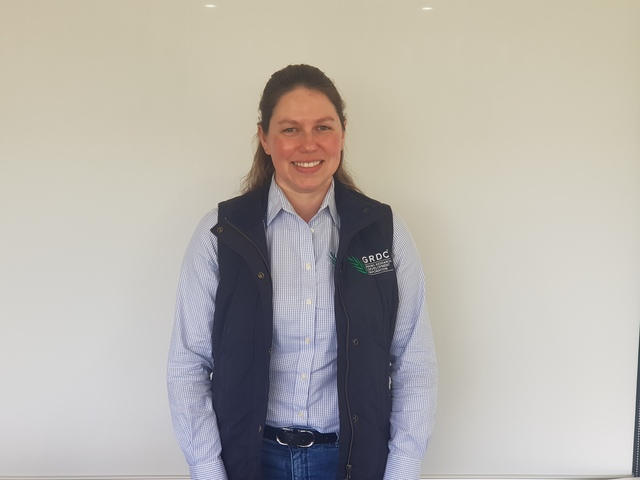
GRDC sustainable cropping systems manager Dr Courtney Peirce said the knowledge gained from the research would support better adoption of tactical agronomy for maximising yield during critical periods in variable climates.
“GRDC’s investment in this initiative reflects our plan to propel growers and industry forward by hitting and exceeding yield and profit targets across every paddock and every season,” she said.
“It will give growers confidence to either continue to adapt or to shift from conservative low-input approaches to more ambitious strategies when conditions are favourable, and it will help provide benchmarks to guide tactical decision making, linking agronomy to critical periods and yield changes.”